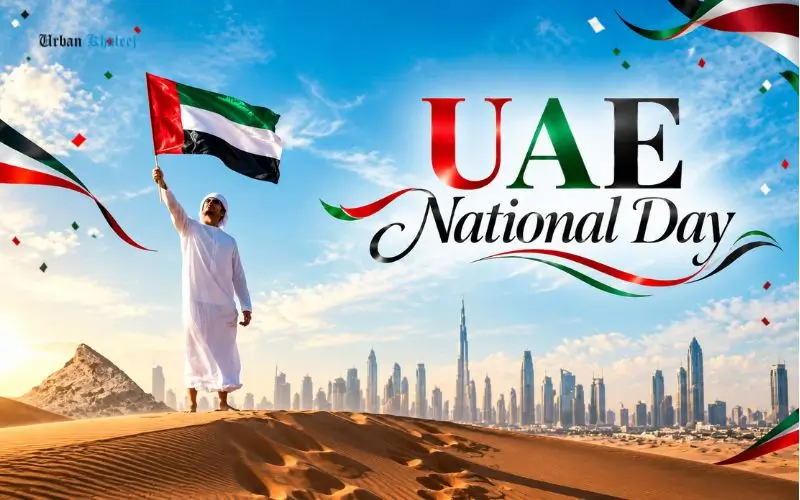
Every year on 2 December, the United Arab Emirates National Day is celebrated, commemorating the country’s establishment in 1971. The Federation comprised six emirates and Ras Al Khaimah joined the Federation on 10 February 1972, making a total of seven emirates. It celebrates the leadership of the UAE’s founding leaders, especially Sheikh Zayed bin Sultan Al Nahyan, the UAE’s first President. The occasion, dubbed Eid Al Etihad, is a symbol of national unity and Emirati heritage as well as shared achievements. The day is celebrated by displaying flags, performing culture, showing fireworks and having family reunions. In addition, the UAE also celebrates official public holidays on 2nd and 3rd Dec.
When Is the UAE’s National Day?
This is in honor of 2 December each year. 2 and 3 December are also National Day public holidays in the UAE as per the official public holiday system in both the public and private sectors. Verify specific information about work arrangements and any additional closures through official announcements for the designated year. Official public-holiday information from the UAE government.
This celebration is now commonly referred to as Eid Al Etihad—the Festival of the Union—in Arabic. It symbolizes the historic move towards a federal state of the emirates and the need for cooperation, shared responsibility and national identity.
Quick facts
| Detail | Information |
| Official date | 2 December |
| Year of federation | 1971 |
| Original founding members | Six emirates |
| Seventh emirate joined | Ras Al Khaimah, on 10 February 1972 |
| Current number of emirates | Seven |
| Common name | Eid Al Etihad |
| Public holidays | 2 and 3 December, subject to official announcements |
| First President | Sheikh Zayed bin Sultan Al Nahyan |
| National flag colours | Red, green, white and black |
Details backed by the Historical Records of the UAE Government and the official information about the Public holiday. History of UAE and UAE Ministry of Foreign Affairs.
The History Behind the Union
The federation was not born out of the blue. After years of talks between the leaders of the emirates regarding political cooperation, military security and the future of the area.
Prior to the formation of the country, the region was connected to the Trucial States. Britain’s political ties with the local rulers were long established and external protection was given by Britain, through arrangements that determined the political relations in the area. The question of a shared future was thrown into sharp relief in 1968 when Britain declared its plans to pull out of the Gulf by the end of 1971.
The role of Sheikh Zayed and Sheikh Rashid
Abu Dhabi’s ruler, Sheikh Zayed bin Sultan Al Nahyan, was a prominent player in the process of federation. The Ruler of Dubai, Sheikh Rashid bin Saeed Al Maktoum, was also a leading figure in developing relations among the emirates.
The two leaders agreed to move forward with the idea of federation on 18 February 1968. Later, talks with rulers of the Trucial States provided the basis for a bigger federation. Their work laid the groundwork for political cooperation to become a viable plan for a new nation.
According to the official account of the UAE’s history, consensus among the rulers is an important part of the process. The federation was not established by the sole decision of one emirate, but rather, it was formed through negotiations and agreements. UAE government history.
The founding on 2 December 1971
The leaders of six emirates signed the unification of the United Arab Emirates on 18 July 1971. On 2 December 1971, the federation was officially formed, uniting Abu Dhabi, Dubai, Sharjah, Ajman, Umm Al Quwain and Fujairah into a single sovereign nation.
Sheikh Zayed was elected as the first president of the country by the rulers. His leadership was intimately linked to the early development of federal institutions, public services and the shared national identity.
On 10 February 1972, Ras Al Khaimah became a member of the federation, bringing the seven emirates together. This is important because the country was established in December 1971 by six emirates, and in 1972 by the seventh. Source: UAE Ministry of Foreign Affairs.
Why the United Arab Emirates National Day Matters
The annual celebration is an observance of more than just the country’s founding date. It offers citizens and residents a chance to consider the pact that united the separate emirates into a federal country and the institutions created since that time.
Unity across seven emirates
The emirates are all unique in terms of their history, local identity and cultural attributes. Federation offers a national platform while retaining the unique traditions and local heritage of the emirates.
These identities come together during the annual event, based on shared ceremonies, national symbols and community events. It also emphasizes the need for federal, local and national-level collaboration between governments and the people across the country.
Remembering the founding leaders
The day is dedicated to Sheikh Zayed bin Sultan Al Nahyan and all the founding rulers of the federation. The political structure of the modern state was established through their negotiations.
Sheikh Zayed is a man well-remembered as the founding president of the UAE, and as an important champion of unity. Sheikh Rashid’s efforts and those of the other founding rulers are also a part of the country’s national history. Biographies of the UAE’s founders are available on the UAE Government’s Founders of the Union portal.
Connecting heritage with national development
The event links past and present life in the country. The traditional crafts, folk performances, historic photographs and heritage displays provide the younger members of the community with insight into the ways of life and communities that existed prior to the federation.
Meanwhile, public celebrations mark the progress made in transport, education, health, infrastructure and other areas. The focus is not only on past achievements but also on the responsibility to contribute to the country’s future.
How the United Arab Emirates National Day Is Celebrated
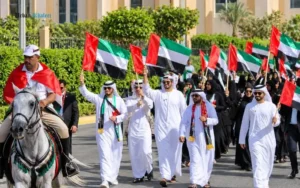
There are celebrations throughout the emirates and they are different depending on the location, organisation and year. Official ceremonies, community events, cultural performances and public displays are common and individual activities and schedules are announced separately.
Flag displays and national colours
One of the most prominent flags to be seen during the celebrations is the UAE flag. Flags can be flown, or red, green, white and black decorations can be used in government buildings, homes, shopping centres, schools and streets.
People like to wear national-coloured clothes and businesses have some decorations on their own walls and hold activities for customers and staff. These shows help to build a common ground without forcing all of the communities to celebrate the same.
Fireworks and evening events
In some cities and organizations, fireworks/firelights, concerts, or other evening entertainment are organized. Depending on the annual program and local permission, special programs can be held in waterfront zones, public spaces and in major visitor destinations.
Events vary from year to year, so visitors are advised to read the information about the events from the emirate, venue, or event organizer. Don’t presume that a celebration will occur in another city.
Cultural performances and heritage villages
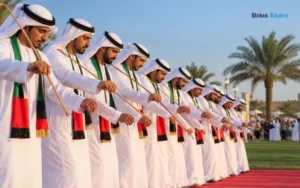
National celebrations include traditional music, folk dances, poetry, crafts and demonstrations of the historic Emirati lifestyle. The activities offer visitors an introduction to the desert, coastal and maritime culture of this country.
Older tools or the display of older household items, local foods, or traditional hospitality may be used in heritage areas. There are also opportunities for schools and community groups to organize performances that link young people to national history.
Family gatherings and community activities
It’s a time for the local people to enjoy family and friends. They are allowed to go to public events, visit attractions, eat together, attend school and neighbourhood activities.
Sometimes, shopping centres, hotels and restaurants advertise special offers or programs. These are run independently and so it is important to check availability, costs and booking policies with each business.
The Seven Emirates of the UAE
The federation is made up of seven emirates that all play a part in the economic, cultural and social life of the country.
Abu Dhabi
The UAE capital and largest emirate in terms of area is Abu Dhabi. It hosts federal institutions; it is home to cultural sites, the government district, energy and large museums. Official ceremonies and public cultural programmes may be organised here to celebrate the National Day.
Dubai
Dubai is a global hub of trade, tourism, aviation and business. Its urban buildings, waterfronts and key public venues offer opportunities for seizing seasonal celebrations and a planned event. Please refer to the official event program before arriving at any of the attractions.
Sharjah
Sharjah is famous for its museums, cultural institutions, libraries and heritage areas. Traditional arts, exhibitions and education are significant means of celebrating its culture.
Ajman
Ajman is the smallest emirate in terms of area and is a highly coastal state. The celebration of the community in public spaces and local venues, and residents’ family gatherings and national decorations are all common.
Umm Al Quwain
Umm Al Quwain has a strong link with the coastal life of the village, fishing culture and nature. Depending on the programme organised annually, local celebrations can serve as a more community-oriented setting.
Fujairah
Fujairah is situated on the Gulf of Oman and is famous for its eastern coast, mountains and its historic sites. Cultural programs and local events could also be enjoyed by the visitors together with the emirate’s outdoor attractions.
Ras Al Khaimah
Ras Al Khaimah is a coastal region with mountain and historic settlements. The UAE was founded by the original six emirates, and took its oath of membership in the federation on 10 February 1972.
These emirates combine to create a national identity and a united federation with national structures and institutions, but each retains its own history and local character.
The UAE Flag and Its Meaning
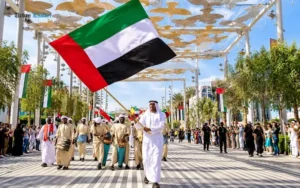
The national flag plays a key role in the festivities, and it is hoisted at government offices, public venues and households. It is of four colours: red, green, white and black.
The flag is often used to symbolize unity and shared heritage among the Arab people. There is a vertical red band between the horizontal green, white and black bands at the hoist. The flag is not the flag of any particular emirate but is the flag of the nation as a whole.
On the occasion of national celebration, citizens can hang flags on their houses, cars and buildings. They are to use flags in a respectful manner, adhere to all rules and do not hang decorations in a manner that may cause a hazard for vehicles or harm property.
Is It a Public Holiday in the UAE?
Yes. The UAE has declared National Day holidays for both public and private institutions on 2nd and 3rd December. All arrangements for a specific year may be confirmed by official notice, particularly if planning work, travel or appointments.
Are government offices and businesses open?
Some government departments, schools and private companies may be closed or open on different hours during the holiday. But not all of the services run at the same times. Hospitals, emergency services and specific essential businesses are still open; shopping centres, hotels, restaurants and tourist attractions can be open or have extended hours.
Please verify the information before visiting a government office, bank, clinic or service centre. Please note that not every business will be open during the same hours.
Do public transport services change?
Any special arrangements, extra services, temporary road closures or adjustments may be declared by transport operators around major events. Some of these measures may be different in specific cities and venues.
Persons intending to attend the celebration must keep up-to-date information from the relevant transport authority and consider for additional travel time. Popular event venues might be blocked for parking or be cordoned off by busy roads.
Practical Tips for Residents and Visitors
With a bit of preparation, the holidays can be a little easier to enjoy, particularly in places with big public events.
- Read the event announcements: Ensure that you get all the details of the date, venue, entry rules and timing from the official event organisers before leaving.
- Arrange transportation in advance: Public gatherings can bring large crowds and parking might be scarce close to popular attractions.
- Follow local traditions: Dress appropriately for the location, and listen to the directions of the event organizers and the community.
- Handle flags responsibly: Ensure national flags are clean and undamaged, and are not used to take up the line of sight of traffic or pedestrians.
- Follow safety instructions: (Stay in the designated viewing area during fireworks or other large events) and follow crowd-control guidance.
- Check opening times: Public offices, shops and attractions may have different hours during the holidays.
- Please check before booking: There may be restrictions on the number of people attending or admission requirements for concerts, special dinners and ticketed attractions.
When scheduling events in the day, they should also take into account the weather conditions and the distance between events. On a map, a route might seem easy, but it can be a different story if there is a lot of traffic or a lot of people around a popular landmark.
Conclusion
The federation itself created the integration of communities with diverse histories within a common national structure. It is celebrated annually, providing an opportunity for the public to reflect on the leaders who brought about the union, and to appreciate Emirati heritage and the importance of cooperation in the development of the country.
The United Arab Emirates National Day is a historical commemoration for the residents, citizens and visitors of the UAE. In order to see why 2 December is an important date in the UAE calendar, you have to understand what happened in 1971 and how it led to the accession of Ras Al Khaimah in 1972, as well as the traditions practiced throughout the seven emirates.
Read Also: Ajman Ladies Park: Timings, Location, Facilities, Entry Fee and Visitor Guide
Zabeel Palace: Location, History, Royal Residence and Visitor Guide
Workers Village Mussafah – Accommodation, Facilities & Location
Frequently Asked Questions
What date is the UAE’s National Day?
It is celebrated on an annual basis on 2 December, which commemorates the establishment of UAE in 1971.
What is Eid Al Etihad?
The UAE’s Union celebration is known as Eid Al Etihad, which emphasizes the importance of unity and shared heritage among the UAE’s people.
Which emirates formed the UAE in 1971?
The federation was established in 1971 by Abu Dhabi, Dubai, Sharjah, Ajman, Umm Al Quwain and Fujairah. Ras Al Khaimah has been a member since 1972.
Who was the first President of the UAE?
In 1971, Sheikh Zayed bin Sultan Al Nahyan was elected UAE’s first President.
Is the UAE’s National Day a two-day holiday?
Yes. Official public holidays (subject to official announcement) are 2 December and 3 December.
How is National Day celebrated in the UAE?
Events include flag displays, cultural activities, family gatherings, concerts and fireworks.
Why is the UAE’s National Day important?
It marks the nation’s founding, celebrates its founding leaders and celebrates the unity of its seven emirates.