One of the little things that you don’t think about until you use a heated floor is the cold floor in the morning. Now it’s walking back that sucks! That is where radiant floor heating mats come in handy, and it’s easy to install them without tearing up floors, mounting a boiler, or hiring a plumber. Choosing the wrong mat, however, costs you money, and you’ll end up with a floor that is only slightly warmer than it would be without a mat or that costs more than it needs to.
What radiant floor heating mats do
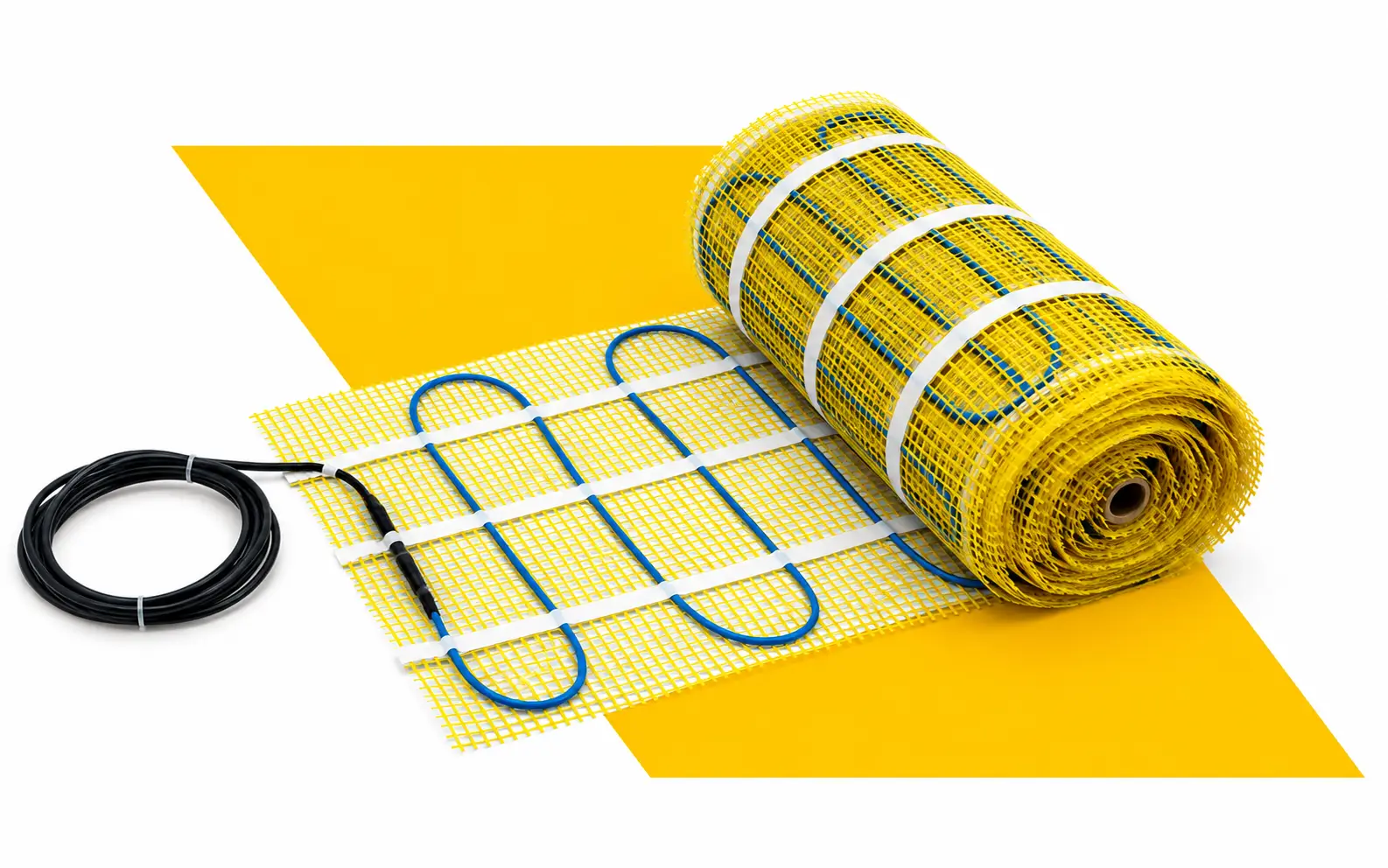
The idea is simple. A thin heating cable is embedded in a fibreglass mat that is laid under your floor covering. The cable is directly heated when it is switched on. The heat flows from the floor, moving up through the room, warming up the objects and persons in the room, but not just throwing hot air around.
The main difference between Radiant floor heating mats and forced air heating is that. The forced-air systems heat the air and circulate it around the room, but in an uneven manner. Radiant systems heat surfaces. The outcome is a more consistent feel and for most people more comfortable.
Plus it’s more efficient! Electric underfloor heating mats, such as those by Tempsens, for instance, can reduce energy use by 20% to 40%, and more, than traditional heating systems, particularly when powered by a digital Thermostat which can ensure the system only operates when it is needed.
Start with the room
How is it that you can obtain four separate policies when one policy is able to provide you with everything? This is the same principle as above. Don’t read any spec sheet until you determine the room you’re heating.
Room type and moisture exposure
Floor heating mats are usually installed in bathrooms or in kitchens, and there’s a reason for that. The cold tile floors are uncomfortable and moisture dries out rapidly. Not all heating cables are suitable for wet areas, however — and for that you need a right moisture-protective mat.
Tempsens floor heating mats have 100% aluminium foil protection all around the cable, and are ideal for environments that may be moist. It has a heat resistant, flame retardant PVC (HR-FR) jacket on the outside. The combination makes the mats apt for bathrooms, kitchens, and other areas where water is available.
Moisture resistant is less important for LRs and bedrooms, but comfort output and energy efficiency more. A mat with a lower watt per square metre rating and a good thermostat control will probably be required.
Floor area
Measure accurately. Tempsens mats fill from a small bathroom section to a large commercial space, offering heat loads as low as 100 W up to as high as 3,300 W in one mat. The power output options are 100 W/m², 150 W/m², and 200 W/m² (or 12 W/ft² in imperial formats). The size of the bathroom matters a lot, as does the size of the area, since there are different types of mats, and a 4-5 m² bathroom will require a different mat than a 20 m² kitchen.
Don’t try to stretch one mat to cover a larger area than it’s designed for. The distance between the cables increases, the heat is not evenly distributed and you lose the purpose of the product.
Understanding power output: Which wattage suits your room?
The three output levels — 100 W/m², 150 W/m², and 200 W/m² — aren’t just numbers on a label. They are representative of the way in which the mat is intended to be used.
It is best used as a comfort heat source, 100 W/m2. It is good for warming the bathroom floor when it is cold or for cooling down the bedroom when it is hot. FHM-SX-100 & FHM-DF-150 models are available in this range.
The middle is 150 W/m2. For primary heating in well-insulated rooms or secondary heating in larger rooms. The FHM-DF-150 doesn’t need to be called as such, as the name implies it’s actually 100 W/m² output, but the cable is actually 15.7 watts per metre, so be sure to check the product specs — not just the model number.
The maximum standard output is 200 W/m². The FHM-SX-200 (17.0 watt per metre, XLPE insulation) is suitable for areas that require radiant heating as the primary heat source, such as areas with much colder winters, or rooms with a high heat loss through window openings and through poorly insulated or uninsulated walls.
Core insulation types: XLPE, FEP, and ETFE
Buyers do not know how important the insulation around the heating cable is. It influences the thermal effect, durability and ability of the mat to withstand temperature stress over the long haul.
The most popular core material used in Tempsens mats is XLPE (cross-linked polyethylene). It has good thermal ageing properties, and the insulation does not become brittle or deteriorate over years and years of heating and cooling. Both the FHM-SX-100 and the FHM-SX-200 comprise XLPE cores.
FEP (fluorinated ethylene propylene) comes with a better thermal rating and chemical resistance. For a renovation project where the mat will be exposed to adhesives, moisture, or cleaning products during installation, the FHM-DF-150 is a good choice because it has FEP insulation.
The FHM-DE-240V-12 model is made of ETFE (ethylene tetrafluoroethylene). ETFE is able to withstand higher temperatures than conventional polyethylene and is thinner than conventional polyethylene for the same insulating value. This will be helpful in installations where the maintenance of as low an increase in floor height as possible is important.
Poor insulation will take three to five years to begin to exhibit its problems, when it becomes noticeable as hot spots due to thermal degradation. It is never necessary with quality insulation from the beginning!
Voltage compatibility and the thermostat question
The standard residential and commercial supply are 230 V AC or 240 V AC; most Tempsens floor heating mats are designed for this power supply.
Check your local supply voltage before ordering. In the US and some other markets, 120 V is standard — which is why the FHM-DE-240V-12 is specifically rated for 240 V use. Using a mat rated for 240 V on a 120 V supply gives you half the heat output you expect. Using a 120 V mat on a 240 V supply destroys it.
The thermostat pairing is equally important. A digital electronic thermostat with a floor sensor controls exactly when the mat runs. Without one, the mat runs continuously and your energy savings disappear. Tempsens mats are designed to work with digital thermostats for this reason — the 20–40% energy reduction figure assumes thermostat control, not constant operation.
Set the thermostat to heat only during occupancy hours, and the running cost drops significantly.
Installation factors to think through before buying
Floor height increase
This is a practical limitation that it’s simple to overlook. A heating mat under tiles or wooden floors will increase the floor height. That can result in a height difference at the bathroom door in bathrooms. It can create a slightly sloped floor in a renovation, so that a room is slightly higher than other rooms.
The low profile nature of tempsens mats means that the height rise is minimal. However, prior to installation, it is advisable to check the thickness of the mat and the total build-up (mat + adhesive + floor covering).
Bending radius
Heating cable comes with a minimum bending radius, which is the minimum bend that it can make without damage. In the case of Tempsens mats, it is five times the thickness of the cable. Going tighter will produce a friction area that will fail with time. This is particularly important at corners, obstacles, and at the edge of the mat.
The cold lead wire
Tempsens mats are sold complete with a 3.5-metre cold lead wire, the unheated portion which links the mat to the thermostat or junction box. This cold lead does not emit heat, so can be passed through walls or conduit without risk. If the standard 3.5m does not meet the needs of your application, the system can be custom length.
Where not to install
Do not stack furniture or furnishings on solid bases over heating mats. If there’s a sofa or wardrobe against the wall, the heat will be held under its feet, increasing over time and reducing the cable’s life. Some manufacturers offer coverage maps that include only the “open” floor area, for just that reason.
Residential vs commercial use
Tempsens floor heating mats can be used for both, but in different ways.
The focus is on comfort in the bathroom, kitchen and living room, the most common environments of the residence. Morning hot floors and low running costs are desired. A programmable mat controller with 100-150 W/m2 power is sufficient to do this. Glass fibre mat format is quicker to install and does not require the need to tape the cables down individually.
Calculations change in commercial applications such as offices, retail stores, and hospitality. The larger the area the more the wattage adds up quickly, making power selection and thermostat zoning more important. Tempsens mats are rated at up to 3,300W per mat, for larger commercial floor sections. Where the space is very large, more than one mat with the separate thermostat zones will provide greater control and will provide more uniform temperature distribution across the floor.
Low energy buildings are a slightly different story. If the walls and ceiling are well insulated, then even a 100 W/m² mat can be used as the main heating source in a room. The floor accumulates heat and gives off it gradually making the mat require a run less often.
Why the warranty and build quality matter more than the price
A floor heating mat is installed under your floor. After the tiles or wood are installed, if a cable fails, you have to tear up everything to install another one. You don’t want to have an expensive and disruptive problem.
Tempsens provide a 30 year manufacturer’s warranty for their floor heating mats. This is only possible due to the insulation of the mats: XLPE, FEP or ETFE to achieve thermal ageing protection, 100% aluminium foil for electrical protection and HR-FR PVC jacketing for the outer protection. No moving components. No replacement or service items to be taken care of.
NABL accreditation of the laboratory and decades of engineering experience in the Tempsens product range ensures that the data shown on the data sheet are true to the product. Not all cheap mats, with their optimistic watt per metre figures, are like this.
A 7 year warranty / 30% discount mat is more expensive over the long term than a 30 year warranty / 50% discount mat.
A quick guide to matching mat to space
The cold-tilted bathroom in the morning requires a mat that has 100–150 W/m² output and a programmable thermostat that is also moisture resistant. This fits FHM-SX-100 or FHM-DF-150.
For a large kitchen with stone or tile floors, 150-200W/m² are appropriate, and for a small, well-insulated room, 100W/m² are appropriate. FEP insulation will withstand the conditions present in the kitchen, such as exposure to cleaning products.
For a higher output, a commercial tiled floor running on 240 V supply is indicated, or if a larger area is required, the FHM-SX-200.
If minimum floor height increase is the most critical, then thin profile mats with ETFE core insulation would be the most important.
Final thought
Selecting a radiant floor heating mat is not a difficult task, but mistakes such as selecting the wrong wattage, the wrong type of insulation, the wrong voltage etc. can mean that the installation is not as efficient as it should be or that it will cost more to run than necessary.
The four key elements to first nail down are the floor area, intended use, moisture exposure, and voltage supply. The rest is taken from there. Rather than making unusual compromises, Tempsens can provide custom built options for heat load, length and voltage to suit your specific project.
Read Also: Opal Tower Business Bay