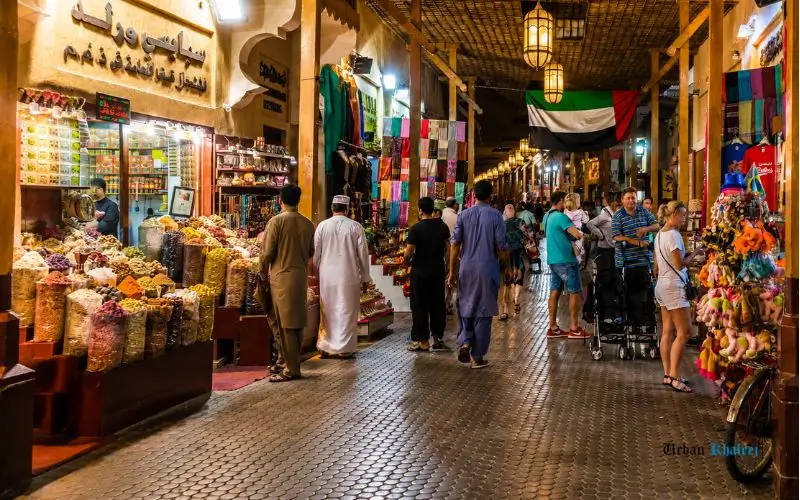
The Spice Market Dubai is a lively place that captures the essence of the city’s trading history and cultural diversity. It’s renowned for its vibrant colors and scents, and draws foodies, tourists, and shoppers from near and far. There is an amazing range of spices, herbs, dried fruits, teas, and ancient Arabian products for visitors to explore in one location. The market is not just about shopping; it’s a place where you can experience the rich history of trade that continues to be followed today. The combination of exotic elements, vibrant relationships, and distinctive items results in an atmosphere that no visitor can forget. Be it the top-quality spices or indulging in a taste of local culture, the Spice Souk is definitely one of the most memorable traditional attractions in the UAE.
Dubai Spice Souk Overview
| Detail | Information |
| Location | Al Ras, Deira, Dubai |
| Entry Fee | Free |
| Opening Hours | 10:00 AM – 10:00 PM (Fri: 4:00 PM – 10:00 PM) |
| Nearest Metro | Al Ras Metro Station |
| Best Time to Visit | Morning or Evening |
| Time Required | 1–2 Hours |
| Famous For | Spices, Saffron, Herbs, Tea & Dried Fruits |
| Shopping Style | Traditional Market with Bargaining |
| Nearby Attraction | Dubai Gold Souk |
| Ideal For | Tourists, Food Lovers & Souvenir Shopping |
Why the Dubai Spice Souk Is So Famous
The Dubai Spice Souk is rightly called such due to its association with the historic fact of Dubai serving as an international trading port in Asia, the Middle East, and Africa. Before Dubai was famous for its skyscrapers and luxurious shopping malls, merchants used to operate along Dubai Creek carrying spices, herbs, perfumes, and textiles.
The market continues with this tradition in today’s times and provides visitors with a true shopping experience, which is seldom seen in today’s shopping malls. Dubai’s history, culture, and commerce make it one of the most photographed traditional sites.
Travelers might visit the Spice Souk for several reasons:
- True Arabian shopping experience.
- Diverse range of high-quality spices
- Competitive prices for bulk ordering.
- Wooden abra to cross Dubai Creek – traditional method
- The location of the Gold Souk and the Perfume Souk.
History of Dubai Spice Souk
The trading route, Dubai Creek, grew up through the years, and the Spice Souk emerged as such. Spices were imported into the country from India, Iran, Pakistan, Sri Lanka, East Africa, and other places and then spread all over the Gulf.
The souk continued as a major wholesale and retail trading hub as Dubai grew to become a global trading hub. The Spice Souk remains a popular destination for those seeking to experience the true flavors of cooking, high-quality saffron, authentic herbs, incense, and gourmet teas, even though its days of preeminence in everyday food shopping have passed.
The market today has a feel of old Dubai, where the traditional trade continues to flourish amid the city’s fast-paced development.
Read Also: Al Attar Center Karama
Where Is Dubai Spice Souk Located?
Located in Al Ras, Deira, close to Dubai Creek and directly across from the Gold Souk, the Spice Souk is situated.
This location makes it easy to include several historic attractions in a single day.
| Detail | Information |
| Area | Al Ras, Deira |
| Nearby Landmark | Dubai Gold Souk |
| Waterfront | Dubai Creek |
| Nearest Metro | Al Ras Metro Station (Green Line) |
| Traditional Transport | Abra across Dubai Creek |
| Entry Fee | Free |
This area is convenient for combining several historic sites into one day. Dubai’s most famous sightseeing activity offered to visitors from Bur Dubai is a traditional abra crossing across the creek before they set off to visit the market.
Opening Hours
The market times are broadly the same as follows:
| Day | Opening Hours |
| Saturday–Thursday | 10:00 AM – 10:00 PM |
| Friday | 4:00 PM – 10:00 PM |
Some stores may also close down for a short period in the afternoon and open up again later in the day. It is recommended to see the current hours before visiting, particularly during the public holidays and during Ramadan.
What Can You Buy at Dubai Spice Souk?
The market is still so popular, partly because of the huge array of products on offer. Expect only cooking spices and find dozens of special ingredients and traditional products.
Premium Saffron
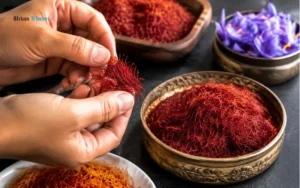
Saffron is one of the most popular items in the market. The varieties are usually available from Iran, Spain, and Kashmir, and Iranian saffron is particularly popular among visitors. Variations in quality and price are based on origin, freshness, and grade.
Cardamom
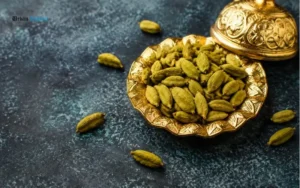
Green cardamom is commonly used in Arabic coffee, desserts, rice dishes, and tea. The whole pods are preferred as they retain the aroma longer than ground cardamom.
Cinnamon
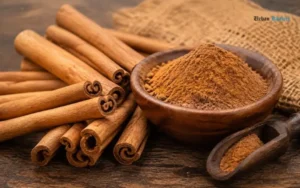
There are several types of cinnamon, such as sticks and powdered cinnamon for making baked goods, drinks, and savory dishes.
Turmeric
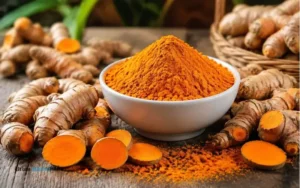
Turmeric powder is a fresh-looking powder sold in large bags and is used in cooking and traditional households.
Sumac
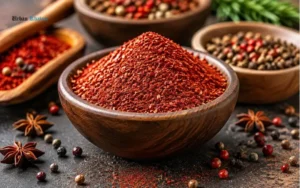
The dark red spice is used to flavour Middle Eastern dishes, grilled meats, salads and dips.
Za’atar
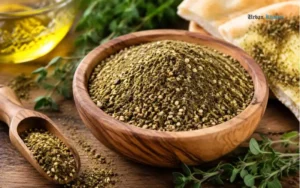
A Middle Eastern spice mixture comprising herbs, sesame seed and spices. It is typically used with olive oil and bread.
Dried Herbs
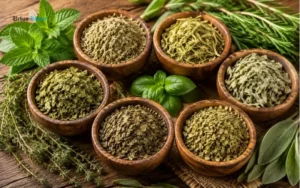
Popular options include:
- Mint
- Rosemary
- Thyme
- Sage
- Basil
- Oregano
Dried Fruits
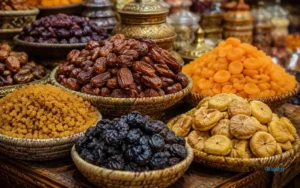
There are lots of stores that also sell:
- Dates
- Apricots
- Figs
- Raisins
- Prunes
They are handy souvenirs and gifts.
Herbal Teas
For tea lovers, there are:
- Chamomile
- Hibiscus
- Green tea blends
- Black tea
- Herbal infusions
- Arabic tea mixtures
Incense and Fragrances
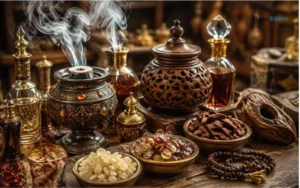
In addition to culinary items, vendors will also have on offer:
- Frankincense
- Myrrh
- Bakhoor
- Oud products
- Natural resins
They are still used in the houses of the Arabs for perfuming their homes and for old ceremonies.
Read Also: Burhani Masjid Sharjah
How to Identify High-Quality Spices
All the spices don’t come in the same quality that’s found on the market. Most people look at a number of things before buying something.
Check the Aroma
Fresh spices give off a strong aroma. Older stock can be identified by weak or stale aromas.
Look at the Color
The more vibrant and bright the colors, the fresher the product will likely be. Super-flavoured spices might be left for a long time.
Ask About Origin
A lot of vendors make it easy to find out where their products are from. The price as well as the quality of some spices like saffron, cardamom, and cinnamon may be affected by the origin.
Compare Multiple Shops
There are a host of similar sellers, and it may well be that by comparing quality and price before purchasing, you will get a better deal.
Is Bargaining Expected?
In the Spice Souk,k it is a common practice to negotiate prices. Most of the retail stores are aware that customers have to negotiate politely, particularly when buying more than one product or a large quantity. Visit Dubai states that it’s customary to bargain when shopping, and bulk transactions can sometimes be more cost-effective.
Here are some helpful hints for doing some practical bargaining:
- Before deciding, try a few different stores.
- Make cost and quality comparisons.
- Purchase multiple products together.
- Be polite and friendly.
- Don’t rush into a purchase.
Many good tourists say that they have been able to negotiate with stores with respect and get a much better price after checking out a few shops and comparing prices. Community reports also that there is significant variation between vendors in price, so shop around.
Best Time to Visit the Spice Souk
The market is open all year round; however, you may experience a difference according to the time of day and season. The best time to visit is during the morning or late afternoon when it is quieter to shop, and in the evening when the residents and tourists wander the small streets.
Old Dubai is quite comfortable to walk around from November to March due to the cooler weather. Many visitors take the opportunity to visit the Spice Souk during these months and also include the Gold Souk, Al Seef and a traditional abra ride over Dubai Creek. The historic souks are one of the most popular Dubai winter tourism destinations, according to Visit Dubai.
Those who don’t like the crowds can go just after the shops open. It is often busier on weekends and public holidays, especially in the evening.
How to Reach Dubai Spice Souk
The Spice Souk is conveniently located, with easy access to Dubai’s public transport network.
By Dubai Metro
Al Ras Metro Station (Green Line) is the closest station. The station is also very close to the market, and the metro is one of the most convenient modes of transportation.
By Traditional Abra
Another popular method of getting to the market is across Dubai Creek on a traditional wooden abra from Bur Dubai. This short ride has been a part of Dubai’s transportation system for decades and provides a glimpse into the historical trading district.
By Taxi
Taxis can be found all over Dubai and will be able to take you back to the entrance of the Spice Souk. This may be helpful for families or travelers who bring bags for shopping.
By Bus
There are multiple RTA bus lines that operate in the Deira area. If you are near a bus stop, it may be a short walk to the market. The Roads and Transport Authority (RTA) journey planner will be able to help identify the most suitable route.
How Much Are Spice Prices at Dubai Spice Souk?
The price of spices in Dubai Spice Souk depends on the product, its quality, origin, quantity bought, and each trader. High-quality spices like saffron often cost more, and common spices like turmeric, cinnamon, and cumin are available at a lower price. Prices in most shops will be determined by them,m and it will be advisable to check a couple of stores and negotiate down nicely before buying.
Approximate Spice Prices at Dubai Spice Souk
| Product | Approximate Price (AED) | Common Origin |
| Saffron (1g) | AED 15–50+ | Iran, Kashmir, Spain |
| Green Cardamom (100g) | AED 15–35 | India, Guatemala |
| Cinnamon Sticks (100g) | AED 8–20 | Sri Lanka, Indonesia |
| Turmeric Powder (100g) | AED 5–15 | India |
| Sumac (100g) | AED 10–25 | Middle East |
| Za’atar (100g) | AED 10–25 | Jordan, Lebanon, Palestine |
| Black Pepper (100g) | AED 8–20 | India, Vietnam |
| Cloves (100g) | AED 12–30 | Indonesia, Madagascar |
| Cumin Seeds (100g) | AED 8–18 | India, Syria |
| Dried Herbs (100g) | AED 5–15 | Various Countries |
| Herbal Tea Blends (100g) | AED 15–40 | UAE & Imported |
| Frankincense (100g) | AED 20–60 | Oman, Somalia |
| Bakhoor (100g) | AED 30–100+ | UAE & Middle East |
Note: These are approximate prices at Dubai Spice Souk. Actual prices may vary from product to product, depending on quality, origin, quantity purchased,d and/or seller. Bargaining is the norm and can often lead to a better deal.
How to Buy Authentic Saffron
Saffron is one of the specialties of the market, and the quality can vary from vendor to vendor. Knowing what to look for can help you make an informed purchase.
Examine the Threads
Saffron of good quality is deep red in color. If there are a lot of yellow or light strands, it may be a lower quality product.
Notice the Aroma
The fresh saffron is fragrant and has a floral and earthy odor. If it’s unflavored or has minimal flavor, it’s probably old or low quality.
Ask About the Origin
Many good vendors can easily distinguish if the saffron is imported from Iran, Kashmir, or Spain. There are price and quality differences for each origin.
Compare Before Buying
Do not just buy the first thing you see; rather, shop around for quality and price. This is a common and effective step that can lead to better value.
Shopping Tips for First-Time Visitors
The Spice Souk is not like a supermarket or shopping mall. With a little preparation, your visit will be more enjoyable.
Don’t rush your buying decision – shop around first. Often, there are many shops that sell the same products, but the presentation, freshness, and price can differ.
Ask the seller when purchasing spices how they are stored and how they can be used. Many vendors will have years of experience and will be willing to describe the use of certain spices in traditional Middle Eastern cooking.
When buying multiple products, it may be possible to get a better overall price if you buy all the products from one shop after negotiating a price.
Common Mistakes to Avoid
First-time visitors tend to make some of the same shopping errors, they tend to make which result in unnecessary spending or disappointment.
A popular error is taking the first price that you get even though you check out several stores around you. Bargaining is a part of the shopping culture, a nd it’s generally expected to be done with politeness.
Another error is to do a deal on price rather than quality. Quality saffron or cardamom can be a little expensive up front, but usually has a better taste and value.
Some visitors buy bulk quantities, even if the product is not fresh. Smelling the spices and finding out the date of their arrival can help assure a high-grade product.
Last but not least, don’t rush through the market. The Spice Souk is more than just a shopping destination; it’s a cultural experience.
Nearby Attractions Worth Visiting
Several historic places are within the vicinity of the Spice Souk, making it convenient to devote a whole day to Old Dubai.
Dubai Gold Souk
The Gold Souk is a renowned place for gold jewellery, diamond jewellery, and gemstone jewellery, and is just a short walk away. It is one of the most popular shopping centers in Dubai.
Dubai Creek
Dubai Creek has been at the heart of trading in Dubai. To take a stroll on the waterfront or to board an abra and ride along will give a new look into Old Dubai.
Al Seef
Al Seef is located along the creek, blending vintage architecture, restaurants, cafés, and boutique stores with waterfront vistas.
Dubai Museum Area
The former Dubai Museum at Al Fahidi Fort has been redeveloped,d while Al Fahidi Historical Neighbourhood, where the museum is situated, remains one of the most important cultural districts in Dubai, featuring traditional Emirati architecture and museums.
Is the Spice Souk Worth Visiting?
Yes, Dubai’s cultural heritage is worth experiencing for travelers who want to immerse themselves in its rich cultural tapestry. The Spice Souk is quite a different place from the shopping malls of the modern city.
Visitors don’t find the international brands of retail stores but rather traditional vendors, fragrant spices, handmade goods, and a market that is a reflection of the history of Dubai as a hub of regional trade. From shopping to just exploring, the market is a source of information about a largely authentic side of Dubai.
Conclusion
The Spice Market is one of Dubai’s most iconic traditional attractions, providing a unique and fascinating window into Dubai’s trading heritage. It is situated in the center of Old Dubai and features colorful stalls selling spices, herbs, dried fruits, teas, and aromatic incense from all over the world. Being close to Dubai Creek and Gold Souk makes the market a convenient addition to a sightseeing trip. The Spice Souk is a place where you can enjoy the culture, history, and commerce. Whether you’re looking for the finest saffron or authentic Arabian spices, the Spice Souk is a must-visit destination. It’s worth wandering around and looking for value in the products by comparing their prices and comparing the quality. This historic marketplace offers a great way to experience Dubai’s traditional side that continues to flourish even today.
Read Also: Al Manama Supermarket Dubai, Sharjah, and Ajman – Complete Guide 2026
LuLu Arabian Center Dubai – Complete Shopping, Dining, and Family Guide
Fish Market UAE Fresh Seafood, Top Markets & Visitor Guide
Frequently Asked Questions
Is there an entry fee for Dubai Spice Souk?
There is no charge for a pop-in to Spice Souk, where you can browse the market without buying anything.
What is the nearest metro station?
The closest station is Al Ras on the Green Line, from which the market is within walking distance.
Can tourists bargain at the Spice Souk?
Yes. Bargains are the norm with shopping, and many vendors expect polite negotiations.
What are the best items to buy?
Saffron, cardamom, cinnamon, za’atar, sumac, herbal teas, dried fruits, bakhoor, frankincense, and other traditional spices are all popular items.
How long should I spend at the market?
Visitors usually spend 1-2 hours exploring the Spice Souk; however, those who are shopping enthusiasts may spend more time if they are comparing products from various shops.
What is the best time to visit Dubai Spice Souk?
The market is at its best when visiting in the morning or late afternoon, when temperatures drop and the crowds are lessened. November through March are particularly popular months thanks to the pleasant winter weather in Dubai.
Can I buy authentic saffron at Dubai Spice Souk?
Absolutely, there are shops out there for the sale of real saffron, which is typically grown in Iran, Kashmir,ir and Spain. You should shop around, do some research on the origin of the products,s and buy from trustworthy sellers to guarantee the quality.