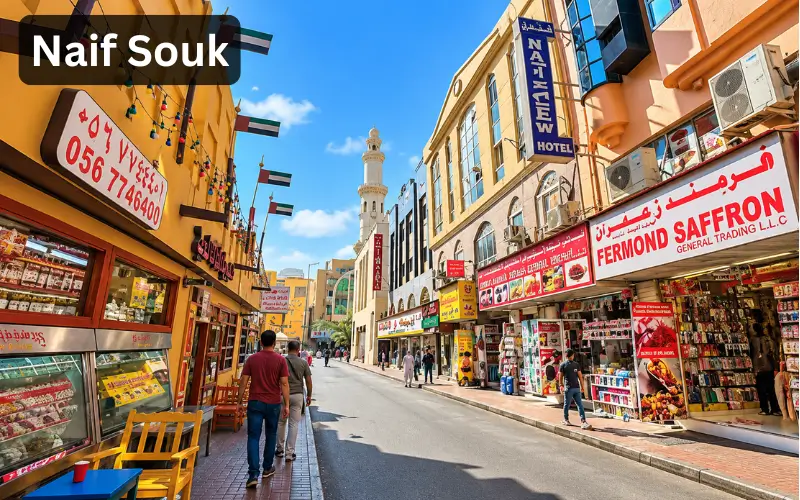
Naif Souk is a traditional Dubai shopping market offering a variety of abayas, traditional clothes, perfumes, textiles, and souvenirs as well as accessories. It allows shoppers to experience traditional Dubai and discover merchandise various than what they generally find in large shopping malls. The souk is also famous for its diversity, low prices, and negotiation skills, which make it a favourite amongst locals and tourists. From traditional wear, perfumes, and gifts to daily-use items, there’s much to discover at Naif Souk in one go.
Naif Souk Quick Facts
| Detail | Information |
| Location | Naif, Deira, Dubai, UAE |
| Market type | Traditional retail and shopping market |
| Best known for | Abayas, traditional clothing, perfumes, textiles, accessories and souvenirs |
| Nearest Metro | Baniyas Square Metro Station |
| Metro line | Dubai Metro Green Line |
| Nearby area | Deira, Old Dubai |
| Entry fee | No general entrance fee |
| Bargaining | Common in many independent shops |
| Official tourism listing | Visit Dubai |
| Managed/regulated market | Listed among Dubai Municipality markets |
Dubai Municipality has officially designated Naif Souk as part of its markets regulated by market ordinances.
What Is Naif Souk Known For?
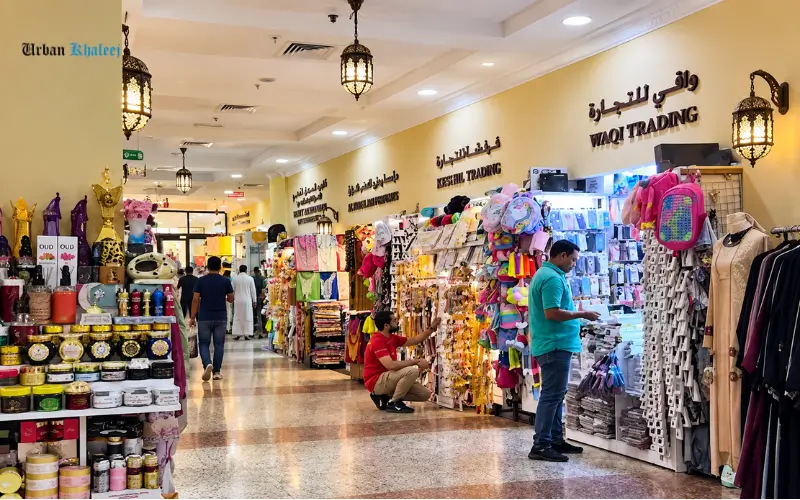
Shopping for traditional and cheap clothes is the most common reason why people come to the market. The area around Naif and Deira shopping area offers a lot of businesses that sell abayas, sheilas, garments, fabrics, and accessories.
The region is especially known for its traditional attire and abayas. Modern shops in the Naif market are offering abayas and sheilas for sale, and the tourism and hospitality sector also mentions traditional garments as one of the main attractions within the market.
Perfumeries, Arabian perfumeries, and shops selling products related to oud and other Middle Eastern perfumes are also available. There are a number of established perfume outlets in the Naif/Deira Souq area, such as Rasasi and Arabian Oud.
Other items they might see at the shop and on the streets include:
- Traditional clothes such as abayas, sheilas, thobes and more
- Oud, perfumes, and Fragrance products
- Textiles and fabrics
- Costume jewellery and fashion accessories
- Shoes, bags and leather goods.
- Small items to take away as souvenirs and gifts
- Clothing and other non-warehouse items
The exact choice of selection varies from shop to shop, so it is better to consider Naif as a shopping district and a traditional market environment, rather than a single specialist shop.
Where Is Naif Souk in Dubai?
Naif Souk is located in one of the historic commercial districts of Dubai called Naif. Located in the area, it is easily accessible to other traditional markets and sights of Old Dubai.
It is especially convenient for visitors wanting to do several things in the Deira area in one visit. The entire area encompasses Gold Souk, Spice Souk, Dubai Creek and Al Sabkha, all of which are shopping or visitor attractions in their own right.
Dubai’s official tourist website lists Naif Souk among the attractions and shopping of the local market, and the transport data currently available states that Baniyas Square Metro Station is the closest one to the location, practical to reach with the Metro.
How to Get to Naif Souk by Metro
The Dubai Metro Green Line is the easiest mode of transport for most tourists.
Exit at Baniyas Square Metro Station and walk to Naif. According to current transport information, the souk will be approximately 8 minutes walk away from the station, but could be nearer or further depending on which exit you take at the station and where you are heading within the souk area.
This makes the Metro one of the more convenient ways to get into the market, especially during the rush hours when it is not as convenient to drive into the older streets of Deira.
Other Public Transport Options
There are also buses to the surrounding Naif area. The current listings for transit in the area include nearby stations such as Naif Police Station, and Naif Park, while several Dubai bus routes pass through the area.
If you are already enjoying the Creek and Deira, walking between nearby souks can be convenient, depending on the circumstances and weather conditions.
Naif Souk History
Naif Souk is one of Dubai traditional markets with a long tradition. The old market had basic stores in a box shape, and thus the name Souk Sanadiq, meaning “box market.”
On 2 April 2008, a significant fire erupted in the old souk, destroying the market and impacting nearly 200 businesses. The event marked a significant moment in the souk’s history.
A temporary market was established for those traders affected by the fire while a permanent building was being set up. Naif Souk was reopened in July 2010, with updated facilities while maintaining its traditional market characteristics.
Today, the souk preserves its old Dubai shopping culture and, along with it, has a modern market building, so that the history is an important part of the whole shopping experience.
Naif Souk Opening Hours
One place where information on the web is not always accurate is the days and hours of operation. The current visitor list will give you a general idea of when the market is in session, usually from about 9 am to 10 pm; some shops in and around the souk have different hours, particularly on Fridays.
As Naif consists of many independently owned shops, it is important to note that there is no single shop schedule in Naif that would apply to all retailers.
If you are travelling there for the sole purpose of purchasing something from a certain store, check its hours of operation before you go. This is more reliable than using the default business hours for the market.
Some shops may also be open on Friday but close around midday to pray the call to prayer, and then reopen later in the afternoon. This variation is reflected in the current listings for Naif shops.
What Should You Buy at Naif Souk?
Abayas and Traditional Clothing
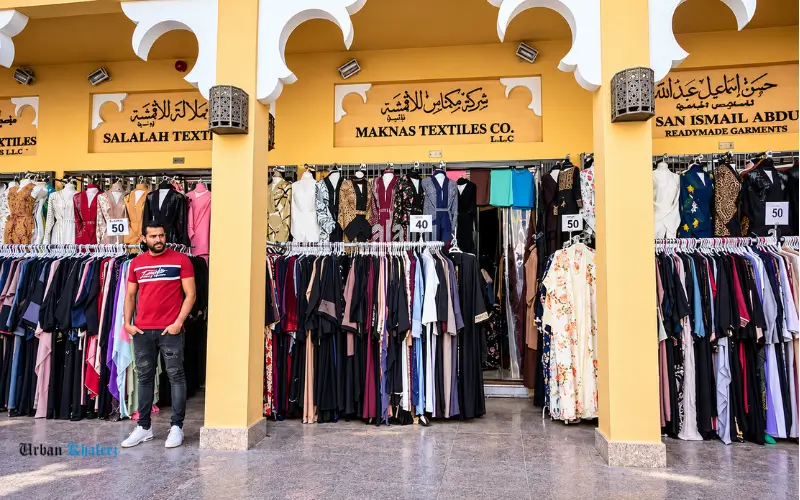
Many shoppers use abayas as their main attraction. There are plenty of abaya and sheila sellers in the market and the other shopping streets around Deira.
The good news is the diversity. Unlike other types of clothing, customers can switch from one store to another and compare fabrics, embroidery, colour, and pattern.
Naif comes in handy when you are looking for options or prices over luxury brands.
Perfumes and Oud
Along with this, the surrounding market of the Naif Souq and the Deira Souq is a great place to venture into Arabian perfumes, oud, and perfumeries.
There are also a number of reputable perfumeries nearby, such as Arabian Oud and Rasasi.
If you care about shopping for perfumes, try not to choose the first shop. Check the size, concentration, ingredients, or product details (if available) and inquire about purchasing an original brand, locally-made scents, or fragrance inspired by another scent.
Textiles and Fabrics
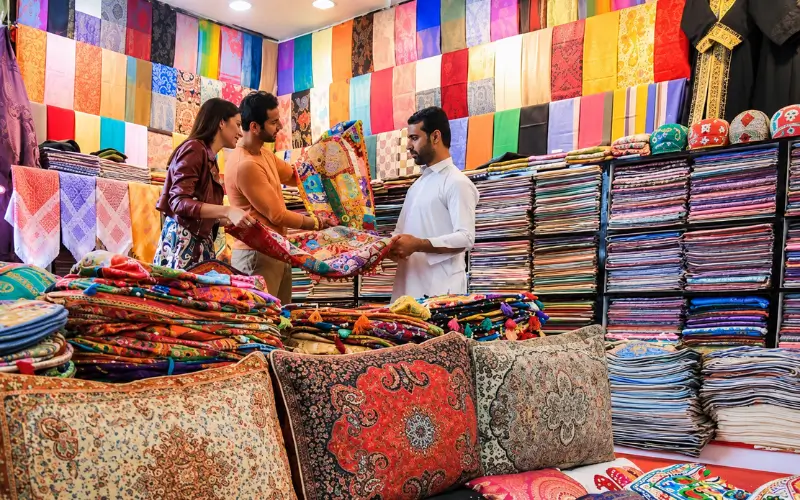
As a result of traditional clothing, it is natural that there is a demand for fabrics and textiles, and the surrounding market area of Deira houses a lot of businesses in textiles and apparel. Local directories list textile sellers and garment factories in Naif and nearby Deira Souq.
This can turn the area into something that can be helpful to shoppers looking for fabric to tailor into garments or traditional attire.
Accessories and Souvenirs
Costume jewellery, accessories, shoes, bags and souvenirs can also be found around the market.
When shopping for souvenirs for friends or family members, it is advisable to compare several shops, as it is possible to get similar-looking products for different prices.
Is Bargaining Allowed at Naif Souk?
Bargaining is also prevalent in the Naif and Deira souk, especially for items such as clothes and accessories, which do not have a set price.
Agreement is frequently mentioned in visitor reviews, and haggling over prices is also featured in descriptions of the area that are geared towards tourism.
Bargaining doesn’t imply that all sellers will agree to any price, however.
To this end, it is suggested to implement the following approach:
- Inquire from the seller about the pricing.
- Look for the item at another store in the same or a similar store.
- Make an appropriate counteroffer.
- If the price is not in your budget, don’t hesitate to politely walk away.
The goal is to compare and negotiate, not to assume that the first price is bad.
Naif Souk vs Gold Souk: Which Should You Visit?
Naif and Dubai Gold Souk are both located in historic Deira, but for different shopping reasons.
| Feature | Naif Souk | Gold Souk |
| Main focus | Clothing and general traditional shopping | Gold and jewellery |
| Abayas | Strong choice | Limited compared with Naif |
| Perfumes | Available in the wider area | Available around surrounding souks |
| Gold jewellery | Not the main reason to visit | Main attraction |
| Bargaining | Common for many independent products | Depends on product and retailer |
| Atmosphere | Local, practical and traditional | Jewellery-focused and tourist-oriented |
| Best for | Traditional clothing, affordable shopping and local-market atmosphere | Gold, jewellery and precious-metal shopping |
When it comes to an abaya (traditional outfit) or a cheap souvenir or perfume, Naif is more in the picture. For those whose priority is purchasing or looking at gold jewellery, then the obvious choice is the Gold Souk.
Best Time to Visit Naif Souk
The best time is the best time, depending on the desired outcome.
The area is more lively later in the afternoon or evening, and some shops remain open into the night for a more comfortable shopping experience. The market becomes busier as the day wears on, as can be seen in the visitors’ data.
In the warmer months of Dubai, having an indoor or covered shopping area is especially beneficial, though the sidewalks may be hot.
If you prefer a more relaxed shopping experience, you might find that coming in early makes it easier to navigate from store to store and see products without the hectic evening rush.
Is Naif Souk Worth Visiting?
Yes, especially if you’re looking for traditional shopping in Dubai, not the large, upscale malls.
The most obvious thing about Naif is that it’s not a sightseeing monument. It’s worth it for shopping, traditional products, local businesses, and its location in the historic Deira.
The market is recommended by Dubai’s official tourism website for Dubai souvenirs and offers a culture that’s not found in big shopping centres because of its long trading history and independent shops.
It is particularly attractive when paired with your Dubai itinerary, which includes the Gold Souk, Spice Souk, or Dubai Creek.
Tips for First-Time Visitors
There’s no need to plan in detail for a successful visit, but there are some helpful habits to help shopping go smoothly.
- Shop around for the best deal. Various stores may have similar products.
- Inspect clothing carefully. Pre-check stitching, fabric, embroidery, and sizing prior to payment.
- Properly ask about the product while paying. This is particularly crucial when using perfumes, oud, and brand items.
- Take a payment method that suits you. There may be varying terms of payment in individual stores.
- Keep valuables secure. Crowded areas require normal awareness of personal belongings, as in any busy market.
- Wear comfortable footwear. It can take a lot longer to walk and explore than you think.
Above all, take your time. Shoppers should stroll the market, shop for comparison and browse, and not go as they do in a traditional mall and go to one store and leave.
Conclusion
For those looking to immerse themselves in the traditional Dubai shopping experience without the hassle, a trip to this market is a recommended option. They can see abayas, traditional clothing, perfumes, textiles, accessories, and souvenirs for sale, with a myriad of choices to choose from. The market is also different from the modern shopping malls in Dubai due to its rich history, traditional ambiance, and the reconstruction of its premises. It’s also great for looking for traditional goods and gifts without having to travel to multiple areas of the city. It could be for yourself, for a special treat for home, or for a taste of another Dubai; this bustling market is definitely worth visiting.
Must Read: Dubai City of Gold: History, Gold Souk, Trade Hub and Buying Guide
Grand Souk Bur Dubai – Location, Shops, Timings & Complete Visitor Guide
Gold Souk Abu Dhabi Explained: Location, Timing & Best Offers
Frequently Asked Questions
Is Naif Souk open every day?
It’s usually open seven days a week. But the hours for individual shops may be different, and the hours may vary on Friday.
What is the market famous for?
It is famous for its abayas, traditional clothing, perfumes, textiles, accessories, and souvenirs. It’s also a fantastic location to enjoy the traditional shopping experience in Dubai.
Which Metro station is closest?
The nearest Metro station is Baniyas Square (L1) on the Green Line. It takes about 8 minutes to walk to the downtown market; the exact distance depends on where you exit and where you walk.
Can I bargain there?
Yes. A lot of shops engage in bargaining, particularly for clothing and accessories etc, market items. Shop around to find the best prices.
Is it good for buying abayas?
Yes. There are numerous stores around selling various kinds of abayas, sheilas, and traditional clothes which are made in different styles, fabrics, and price ranges.
Can I buy perfumes there?
Yes. There are a few perfume and fragrance stores, along with stores that sell Arabian fragrances and oud-based perfumes.
Is Naif Souk the same as the Gold Souk?
No. They are located in separate markets in Deira. There are two main Gold Souks, one for gold and one for jewellery, whereas this market is a more common spot for clothing and traditional goods, perfumes, and general shopping.
When did the current market reopen?
The present market was destroyed by a large fire in April 2008 and was rebuilt in July 2010.
Was the market affected by a fire?
Yes. A major fire on 2 April 2008 destroyed the old market and affected almost 200 shops. A makeshift market was then set up for the traders while the new building was being built.
Is it worth visiting for tourists?
Yes, especially for those who want to enjoy the authentic shopping experience, local market culture, and Old Dubai. It is also a great choice for traditional clothes, gift items, and souvenirs.