The move from PSD2 to the new PSD3 and PSR package makes complete changes to the European financial framework. In 2026, enterprise fintech leaders and merchants have to quickly adjust their Merchant APIs so that they can carry out direct account-to-account transactions. This article outlines the important technical consequences for infrastructure reliability and the allocation of liability in the various European jurisdictions. To successfully navigate the operational transition period it is necessary to strictly meet the new PSD3 regulatory milestones and to carry out immediate upgrades to the infrastructure.
Understanding PSD3 Regulation and PSR Framework Goal
This revised framework has been developed by the European Commission in order to attain some very definite structural objectives, namely by bringing together Electronic Money Institutions (EMIs) and Payment Institutions (PIs) into a single system, which in effect puts the newcomers on a level with the existing commercial banks.
This regulatory unification actively targets three core objectives for payment service providers:
- Building up trust among consumers in digital transactions.
- Making it easy for customers to complete account-to-account (A2A) transfers.
- Giving non-bank payment service providers direct access to the central payment systems.
The pursuit of these objectives leads to competition in the digital economy, so companies that are introducing Open Banking Solutions should quickly bring their infrastructure in line with these requirements.
PSD3 Directive vs. PSR Regulation: Legal Mechanics
Grasping the important legal difference between the two types of instruments stops compliance failures from occurring. The PSD3 regulation functions as a directive and therefore must be explicitly incorporated into the national laws of each individual EU member state. On the other hand, the Payment Services Regulation (PSR) has direct and uniform legal effect throughout the entire single market without suffering any local fragmentation. This two-pronged method guarantees both regional flexibility and strict standardisation across all open banking infrastructure.
How PSD3 Regulation Enhances Open Banking Solutions
The new framework places a strong emphasis on the payment initiation (PISP) structure rather than on the general non-payment open finance rules. Strict regulatory requirements work to eliminate any artificial obstacles in account-to-account (A2A) checkout processes. Enterprise merchants are able to obtain automated cash visibility, achieve real-time liquidity reconciliation, and benefit from much lower fee rates than those of traditional card networks. Moreover, integration with the Financial Data Access Regulation (FIDA) increases the usefulness of Merchant APIs. Focusing on direct payment initiation changes the way businesses handle their daily cash flow.
Stricter API Performance Standards for Open Banking Payment
The updated rules place on Account Servicing Payment Service Providers strict and enhanced technical requirements and have officially got rid of the old fallback workarounds, such as the fragile method of screen scraping.
Banks must now provide dedicated, high-availability developer Merchant APIs that meet strict technical criteria:
- Core banking systems must have Service Level Agreements (SLAs) that specify a minimum level of uptime.
- There are transparent status dashboards which show the real-time API performance metrics.
- Use standardized error codes to make it easier for developers to troubleshoot.
The fulfilment of these technical requirements finally brings to an end the period of unreliable bank connections, so that merchants can now depend on highly stable API performance standards when processing important transactions.
Fraud Prevention and SCA Evolution Under PSR
The updated framework is designed to modernise Strong Customer Authentication (SCA) so that it achieves a balance between high security and ease of use for customers. It has now become necessary for banks to use behavioral biometrics and to make sure that authentication is available to people who do not use smartphones. The regulations also include broader exemptions for low-risk transactions. Because the modernised SCA reduces cart abandonment during the bank app redirect process, it at the same time remains in full compliance with PSD3 regulations. As a result, merchants who are implementing Open Banking Solutions see an immediate increase in their conversion rates.
Verification of Payee and APP Fraud Liability
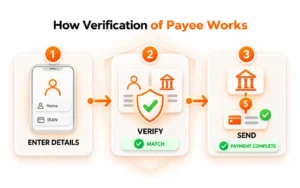
European authorities have ordered the immediate introduction of the Verification of Payee (VoP) for all EU SEPA payments. The system is identical to the highly successful UK Confirmation of Payee (CoP) system. Before carrying out a transfer, payment service providers are required to carry out an automated check that matches the name with the IBAN. Now, any PSP that fails this verification is directly financially liable for fraud and spoofing scams relating to Authorised Push Payments (APP). This major shift in liability effectively safeguards both commercial payees and individual consumers in the context of an Open Banking Payment.
Narrowing the Commercial Agent Exclusion for Marketplaces
The regulators have greatly tightened the Commercial Agent Exclusion as part of the new framework. Currently, multi-vendor e-commerce platforms and digital marketplaces which hold intermediary funds are faced with a clear dilemma. They have to either obtain for themselves a complicated PI/EMI authorisation or arrange for payments to be made through a fully licensed third-party provider. By working with compliant non-bank PSPs, marketplaces can carry on operating within the law without having to take on the heavy regulatory licensing requirements. This change means that platforms now have to deal with merchant settlements in a different way.
Comparing PSD2 and PSD3 Open Banking Payment Rules
Executive leadership needs a clear understanding of how merchant integrations change between the old and new regimes. The following table highlights the critical differences shaping modern payment architecture:
| Feature / Rule | PSD2 Baseline | PSD3 / PSR Standard |
| API Reliability | Inconsistent performance SLAs | Strict API performance standards |
| Fraud Prevention | Basic SCA checks | Mandatory Verification of Payee |
| Marketplace Scope | Broad commercial agent exclusion | Narrowed exclusion requiring licenses |
| Authentication | High-friction redirects | Low-friction SCA exemptions |
Understanding these structural differences helps technical teams prioritize their development sprints. Upgrading systems to match the PSD3 regulation standard guarantees better transaction completion rates.
UK Faster Payments vs EU Open Banking Solutions
To manage the cross-border payment systems in Europe one has to deal with the various regional systems; the UK pursues a separate course based on the UK National Payments Vision and makes use of the mandatory Confirmation of Payee together with the Faster Payments rail. On the other hand, the EU covering 29 countries is based on SEPA Instant integration and the Verification of Payee (VoP). Merchants who carry on business in both Britain and on the continent definitely need a single API that links both of the domestic systems. Combining these connections makes the process of cross-border reconciliation much simpler.
Strategic Preparation Using Dedicated Open Banking Solutions
Merchant leadership teams have to actively adjust to these regulatory changes if they are to keep their operations efficient. The CFOs and product managers should immediately coordinate their internal resources in order to deal with DORA compliance and technical readiness.
Technical and financial teams must execute these sequential preparation steps without delay:
- Check the current rates at which customers drop off during the checkout process for all of the existing Merchant APIs.
- Check the transaction processes on the review marketplace against the new commercial agent rules.
- Stress-test the primary payment initiation APIs to verify payee readiness.
Carrying out these audits makes it possible for the platforms to stay compliant at the same time as improving the checkout experience. Allowing partnerships with licensed payment service providers speeds up this important technical change.
Securing Revenue With Scalable Open Banking Payment
The move to PSD3 and PSR changes account-to-account transfers from being a secondary experiment to becoming a mainstay, bank-grade checkout option. Merchants operating across borders need to work with specialised infrastructure providers if they are to benefit from instant settlement. By upgrading your system today you will ensure that you remain fully compliant and at the same time improve your operational liquidity. Act now to modernise your checkout systems and get rid of those unnecessary processing fees. Protect your financial infrastructure for the future by working with TODA Pay to incorporate strong Open Banking technology directly into your platform.
Read Also: Abu Dhabi Commercial Bank