In a city defined by impossible ambition and luxury mega-projects, water security is the silent foundation of Dubai’s continuous growth. Large-scale water treatment and desalination plants are not just engineering feats; they are mission-critical assets that enable the entire Dubai lifestyle, from its world-class marinas to its booming waterfront real estate. These facilities are incredibly energy-intensive, requiring constant, massive power to drive high-pressure pumps and filtration systems—energy often sourced from innovative Sustainable Solar Power Solutions. The single most vital, yet hidden, component ensuring this 24/7 operation is the specialized cable infrastructure. Without cabling built to withstand the UAE’s specific harsh climate, the corrosive environment of desalination plants, and extreme power loads, Dubai’s water lifeline would quickly fail, threatening the security of its billion-dirham developments.
The Harsh Environment of Water Purity
A water treatment plant is a uniquely hostile environment for electrical systems, especially in the Arabian Gulf. These conditions pose a constant, extreme threat to standard wiring.
1. Chemical and Moisture Attack
Water treatment in the UAE involves a wide range of chemicals, from chlorine and ozone to acidic and alkaline agents for pH balancing. The coastal location means desalination plants face the added threat of “saline fog”—a constant mist of saltwater that is highly corrosive to metals. Standard cable jackets would quickly swell, crack, and allow moisture to reach the conductors, leading to electrical faults that risk stopping critical city operations.
2. Submersion and Flooding
Cables are often routed through underground conduits or directly within water tanks beneath Dubai’s infrastructure. These cables must be rated for continuous submersion (AD8 rating). A flaw in cable waterproofing can result in “wicking,” where moisture travels along the conductor, destroying kilometers of essential cabling from a single entry point.
Powering the Muscles: Pump and Motor Control
The “muscles” of a water treatment plant are the pumps. These massive electric motors require high-voltage and medium-voltage power feeds that run 24/7 to support Dubai’s constant demand.
- Variable Frequency Drives (VFDs): To meet the UAE’s energy-efficiency mandates, most modern plants use VFDs to control pump speed. However, VFDs create significant electrical noise and high-frequency voltage spikes. Cables used for these pumps must be specialized VFD cables with robust shielding and symmetrical grounding to prevent this “noise” from damaging sensitive motor bearings or interfering with the plant’s essential control sensors.
- Thermal Management: Given the continuous high currents drawn by hundreds of pumps, thermal management in the cable trays is essential to prevent premature insulation aging and ensure the long-term reliability required by mission-critical infrastructure.
The Brain of the Plant: Automation and Instrumentation
Modern water plants in Dubai are highly automated, relying on thousands of sensors that track flow rates, pressure, turbidity, and chemical levels to maintain output quality and efficiency. This requires a sophisticated data nervous system.
- Signal Integrity: Instrumentation cables must be perfectly shielded to ensure that the small signals from sensors aren’t corrupted by the massive magnetic fields of the nearby pump motors.
- Fiber Optic Backbones: Large plants use ruggedized, often armored, fiber optic backbones to link remote pumping stations and treatment basins back to the central control room, guaranteeing reliable data flow alongside high-power electricity and water mains.
Sourcing for UAE Resilience
In a mission-critical facility that secures the water supply for a global hub like Dubai, there is no room for compromise on material quality. This is why project developers and contractors rely exclusively on a reputable Cable Manufacturer & Supplier in the UAE. Local manufacturing expertise is crucial, as these providers possess firsthand knowledge of the specific regional climate—intense heat, saline humidity, and abrasive sand. By providing certified, zero-defect cables that meet international standards for chemical and moisture resistance, these manufacturers serve as the silent guardians of Dubai’s vital water security and support its commitment to infrastructure excellence.
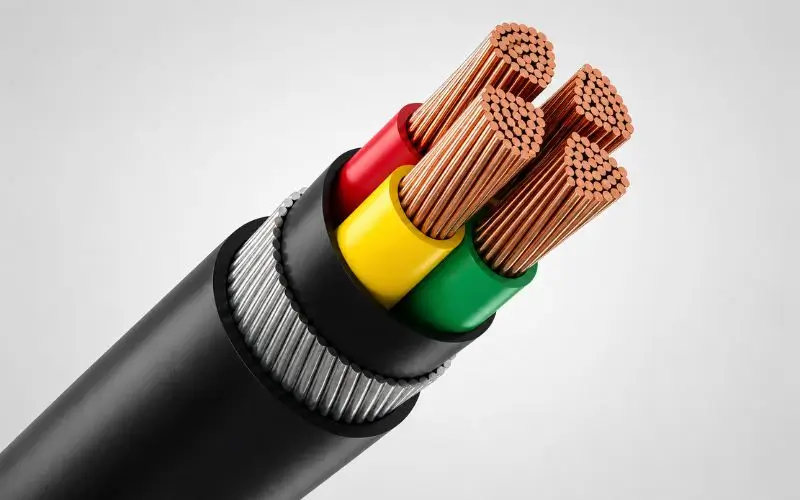
The energy scale of these operations is staggering. A single large-scale desalination plant can consume as much electricity as a small city, making the power transmission and distribution network one of the most critical elements of the entire infrastructure. The medium-voltage (MV) cables delivering this immense load must be virtually fail-safe. They often employ Cross-Linked Polyethylene (XLPE) insulation—a thermoset material that offers superior thermal and electrical properties compared to conventional PVC, ensuring stability even when operating continuously at peak capacity in the relentless desert heat. This isn’t just about wiring; it’s about installing hyper-reliable power highways capable of protecting the massive investment in Dubai’s utilities.
The Unseen Imperative: Fire Safety in Dubai’s Water Command Centers
Dubai’s commitment to safety is absolute, especially within mission-critical facilities that affect millions of residents and the global business hub. While water plants battle corrosion and moisture, they must simultaneously be protected against the risk of fire—which could wipe out the plant’s control systems. In this high-stakes environment, standard cables are a liability; when they burn, they release dense, toxic smoke that can incapacitate operators and destroy sensitive, multi-million-dirham electronic equipment. For this reason, specific areas within Dubai’s treatment facilities demand Low Smoke, Zero Halogen (LSZH) or Fire Survival (FS) cables. These specialized power and control cables are designed to:
The necessity of absolute circuit integrity is why developers prioritize fire resistant cable suppliers in uae when sourcing for these essential installations.
- Prevent Smoke and Toxic Fumes: LSZH jackets drastically limit the release of corrosive gases and dense smoke, preserving air quality for evacuation and protecting vital machinery.
- Ensure Circuit Integrity: Fire Survival (FS) cables go further, allowing essential life-safety circuits—like fire alarms, ventilation, and emergency lighting—to maintain operation for a specified time during a fire, ensuring a controlled shutdown and protecting human life. This level of unseen protection is non-negotiable in facilities underpinning the city’s continuity.
Hyper-Monitoring: The Brain of the Plant Meets the Future
The ambition of Dubai’s water sector goes beyond mere production; it demands perfect efficiency. This requires a level of monitoring and control that is more akin to an air traffic control center than a traditional factory. The next generation of water infrastructure is integrating the Industrial Internet of Things (IIoT) and Big Data, demanding an even more specialized cabling backbone.
- The Fiber Revolution: Ruggedized fiber optic cables are the only medium that can handle the sheer bandwidth needed to transmit real-time data from thousands of sensors across kilometers of pipeline back to a centralized AI dashboard. Because fiber optics transmit light instead of electrical signals, they are completely immune to the electromagnetic interference generated by massive VFD-driven pumps, guaranteeing ‘clean’ data for predictive maintenance and instantaneous decision-making.
- Shielding the Signals of Success: Every millimeter of data cable, from the control room’s programmable logic controllers (PLCs) to the remote chemical dosing stations, must be shielded with multiple layers of foil and braiding to maintain signal integrity. This microscopic attention to detail is what separates a world-class, fault-tolerant Dubai facility from a vulnerable infrastructure asset.
Conclusion: The Energy-Water Link
The link between energy and water is profound, especially in the UAE where massive desalination efforts are underway. It takes energy to clean water, and it takes reliable infrastructure to move that energy. Cable infrastructure for Dubai’s large-scale water treatment plants is a specialized discipline that balances massive power distribution with the delicate needs of automation—all while fighting a constant battle against the corrosive Gulf environment. By investing in high-quality, specialized cables designed for these wet and chemical environments, Dubai ensures that the flow of clean water remains as constant and reliable as the electricity that produces it, safeguarding the city’s future.
Your Water Plant Cabling Questions Answered (FAQs)
- Why do water treatment plants in Dubai need specialized cables?
Standard cables are not designed to withstand the constant high humidity, intense salt spray from the Arabian Gulf, or exposure to treatment chemicals like chlorine. Specialized cables use resistant materials like HDPE jackets and water-blocking tapes to ensure a service life of 30 years or more in these harsh conditions. - What happens if water gets inside a power cable?
If water penetrates the insulation of a high-voltage cable, it can cause “water treeing”—microscopic channels that grow through the insulation. Over time, these channels weaken the insulation until the cable suffers a catastrophic electrical blowout, potentially halting water production for major city districts. - Why are VFD cables important for water pumps?
Variable Frequency Drives (VFDs) are essential for energy savings by controlling pump speed, but they generate electrical “noise.” VFD cables have extra shielding and specific ground wiring to contain this noise, protecting the pump’s motor and the plant’s sensors from interference. - Do these cables need to be fire-resistant?
Yes. In a mission-critical facility, essential life-safety circuits (emergency lighting, ventilation, and fire alarm systems) must continue to work during a fire. Fire-resistant (or fire survival) cables are mandated for these critical systems. - Are these cables laid underground or in trays?
Both. Heavy power feeds to the plant are usually laid underground for protection within the city’s infrastructure. Within the plant itself, cables are often routed on heavy-duty stainless steel or fiberglass cable trays to allow for easy inspection and to protect them from chemical spills on the floor.
Read Also: Sharjah City Center