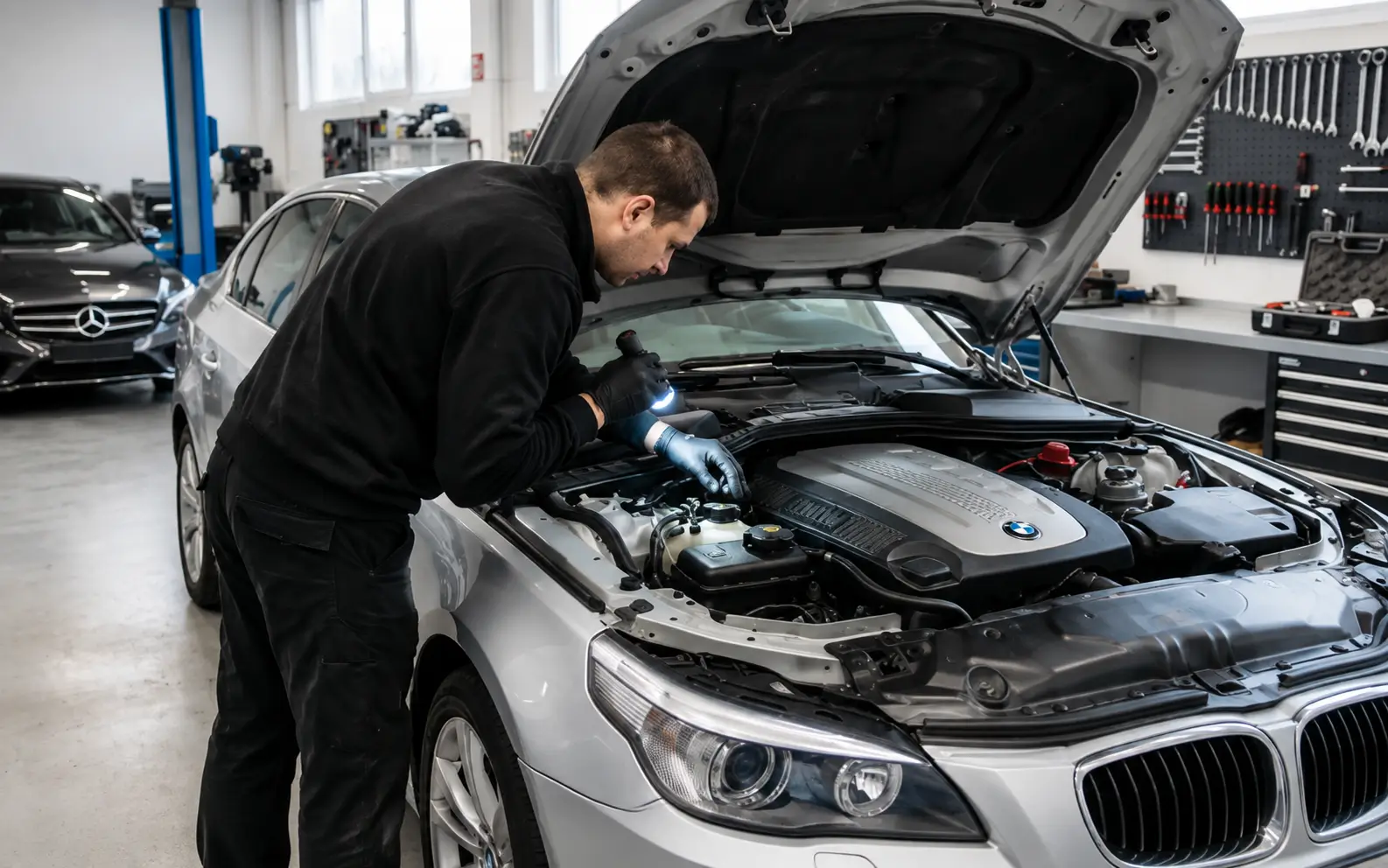
BMW cars are known for their potent engines and smooth driving experience, but they also require proper care and attention to ensure their reliability. Hot climates can cause engine and cooling system issues to occur more rapidly due to the added stresses of high temperatures on critical parts.
Here are the most frequent BMW engine and cooling system issues: Electric water pump failure, coolant leaks, radiator blockage, and a failing thermostat. Other issues that are common include worn out engine oil hoses, broken engine oil expansion tanks, and leaking engine oil due to worn parts.
Overheating can also be a problem, and cooling system performance can be affected by weak batteries and poor maintenance. Early diagnosis of these issues ensures that you don’t have to pay for costly repairs and that your BMW runs at its peak.
Why Are BMW Cooling System Problems Common?
Many vehicles have to be operated at lower temperatures to boost their performance and fuel efficiency, but BMW engines don’t. This is a good design, but it also requires the proper functioning of the individual components of the cooling system.
The cooling system operates more intensely in areas where the temperature can rise to as high as 45°C in summer. Regular inspections are necessary to prevent expensive engine damage and overheating due to heat, dust, and stop-and-go traffic wear on plastic parts, electric water pumps, hoses, and coolant lines.
Common BMW Engine and Cooling System Problems
Many times, BMW cooling and engine issues start with minor symptoms that escalate into more serious issues. Knowing about these frequent problems will enable the owner to act in time and prevent the occurrence of unnecessary breakdowns.
| Problem | Common Cause | Possible Result |
| Electric water pump failure | Heat and electronic wear | Engine overheating |
| Expansion tank cracks | Plastic deterioration | Coolant leaks |
| Radiator blockage | Sand and dust buildup | Poor engine cooling |
| Oil filter housing gasket leak | Aged rubber gasket | Oil leaks and belt damage |
| Valve cover gasket leak | Heat-related gasket failure | Oil leaks and engine misfires |
| Thermostat failure | Wear and overheating | Unstable engine temperature |
| Coolant hose damage | Heat and pressure | Coolant loss |
| Low coolant level | Leaks or poor maintenance | Overheating |
| Dirty cooling system | Old coolant and debris | Reduced cooling efficiency |
As the BMW engine and cooling system are involved, they must be properly inspected, as minor issues can cost a lot of money. By collaborating with a reputable BMW workshop in Abu Dhabi car maintenance service such as Exotic Auto Services, you can rely on a vehicle that is diagnosed accurately, cared for by experts, and maintained by the use of state-of-the-art tools.
There are early signs that can be detected by experienced experts and solutions that can be recommended to ensure your BMW continues to run smoothly.
Let’s discuss the issues in detail:
1. Electric Water Pump Failure
Electric water pumps are used in many of today’s BMW models rather than mechanical water pumps. These pumps commonly fail after years of operating in high temperatures.
Without the pump operating, coolant is not able to flow effectively again, and engine temperature is going to increase rapidly.
Warning lights, reduced engine power, and overheating may be noticed by the driver. One of the first steps to prevent major engine damage is to replace a failing water pump before it breaks.
2. Cracked Coolant Expansion Tank
A common problem with BMW expansion tanks is that they are frequently plastic and tend to crack with repeated exposure to extreme heat. Small cracks may develop over time and cause coolant to leak from the system.
A leak, even a small one, can decrease cooling efficiency and lead to engine overheating. Periodic check-ups can prevent failure of expansion tanks that could keep the car from moving.
3. Radiator Blocked by Sand and Dust
Dust and sand can easily collect between the radiator and air conditioning condenser, especially when driving in desert conditions. This buildup creates a restriction of airflow and causes heat to not be expelled from the cooling system effectively.
This causes the engines to get hot, especially under conditions of low-speed traffic. Cleaning of radiators by a professional company will help to clear the trapped debris and restore proper airflow, which will ensure the engine operates at safe temperatures all year round.
4. Oil Filter Housing Gasket Leaks
The oil filter housing gasket is among the most frequently leaking oil components on a lot of BMW engines. With time, the rubber gasket becomes hardened and no longer seals due to heat. Oil may start leaking to other parts of the engine and even onto the drive belt.
If the oil continues to leak, it can cause costly damage to the engine. Replace gaskets early to avoid bigger mechanical issues and engine cleanliness.
5. Valve Cover Gasket Failure
The valve cover gasket is a seal that cements the top of the engine to prevent oil leakage. Over time, the gasket cracks and shrinks due to continuous exposure to engine heat.
The oil can leak into the spark plug holes and lead to engine misfiring, or drip onto hot engine components and lead to a burning odor. Replacing the gasket when leaks occur is to prevent further engine damage and maintain engine performance when the first leak occurs.
6. Thermostat Problems
Coolant flow through the engine is controlled by the thermostat. A bad thermostat can stay closed, leading to an overheated engine, or open, which will keep the engine from getting to proper operating temperature.
In both cases, engines are less efficient and can cause warning lights to appear on the dashboard. Schedule routine inspections during servicing to detect thermostat problems before they impact engine performance.
7. Damaged Coolant Hoses
Hot coolant is continually pumped around the engine in coolant hoses. As the rubber material is weakened by high temperatures and pressures over time, cracks and leaks may occur.
A leak, no matter how small, can decrease coolant levels and, in time, lead to overheating. Regularly inspecting hoses for swelling, softness, and visible cracks during each service will help to avoid unexpected hose failure.
8. Low or Contaminated Coolant
Coolant keeps the engine cool and helps to prevent engine corrosion. Just continually filling coolant back in without addressing the cause of the leak is not a solution. When the old or contaminated coolant isn’t as effective at heat transfer.
Cooling system flushing and coolant changes as recommended promote optimum engine temperature and safeguard internal parts.
9. Engine Overheating
Overheating is frequently the culmination of a number of problems with the cooling system. Engine temperature can increase due to a faulty water pump, clogged radiator, coolant leakage, or a broken thermostat.
Driving an overheating BMW for an extended period can lead to damage to the head gaskets or warped heads. Take the car to a safe place and get it professionally checked right away if it overheats.
Warning Signs Your BMW Cooling System Needs Attention
Many cooling system issues give warning signs before it fails. Knowing these symptoms can help to prevent costly repairs.
- Coolant temp is higher than normal: If the coolant temperature gauge is higher than normal, it is likely that the cooling system is not operating efficiently.
- Low coolant warning: If the coolant warning is on frequently, there could be a leak or the cooling system might be failing.
- Leaking coolant underneath the car: Any leak under the car should never be ignored, as coolant puddles are present.
- Steam in the engine compartment: Steam generally means that the cooling system has a leak or the engine is overheating and needs attention.
- Engine smells burning: Oil that drips onto hot engine surfaces can produce a burning smell.
- Oil in spark plug wells: Oil can enter spark plug wells and impact ignition performance and engine smoothness.
- Blocked radiator: This can also occur when the air conditioning condenser is not performing well due to poor air conditioning performance.
- Abnormal cooling fan activity: If the cooling fans are operating all the time, the engine might not be cooling properly.
- Multiple overheating events: When there is more than one overheating event, it is typically indicative of a larger cooling system issue that should be addressed by a professional.
How to Prevent BMW Engine and Cooling System Problems?
The best way to avoid significant engine repairs is to perform preventive maintenance. Regular system checks enable technicians to detect worn components in advance and maintain the cooling system’s efficiency.
- Perform a recommended flush of the cooling system.
- Change the electric water pump before it’s time.
- Check the thermostat when cool system is serviced.
- Inspect coolant hoses for cracks or bulging.
- Install new expansion tanks before they develop any leaks.
- Clean radiator and condenser to eliminate sand and dust.
- Repair oil leaks immediately upon detection.
- Check coolant frequently.
- Have professional diagnostics done as a part of routine servicing.
Why Professional BMW Diagnostics Matter?
Today’s BMWs feature sophisticated electronic systems that monitor engine operation, coolant temperature, and cooling system operation. A lot of issues can start before the warning light comes up on the instrument panel.
Professional diagnostic equipment ensures that the technicians can detect any hidden faults, test sensor performance,e and locate any failing components before they cause any major engine issues. Early detection not only saves money for repairs but also helps to keep your BMW running safely and efficiently.
Exotic Auto Services is known for its luxury and performance car services, making it a suitable option for BMW owners seeking expert diagnostics and cooling system maintenance.
They have expert technicians who can accurately detect problems through the use of advanced technology and specialist maintenance to ensure BMW cars operate reliably.
Conclusion
BMW engines are known for their impressive performance, but they require a well-functioning cooling system to run safely. Overheating and costly engine repairs can be avoided through regular coolant changes, radiator cleaning, oil leak repairs, water pump inspection, and professional diagnosis.
Working on these parts early will help you maintain a more reliable engine, increase the life of your engine, and ensure that your BMW will still be performing to its original design for many years.
Read Also: Al Aweer Auto Market