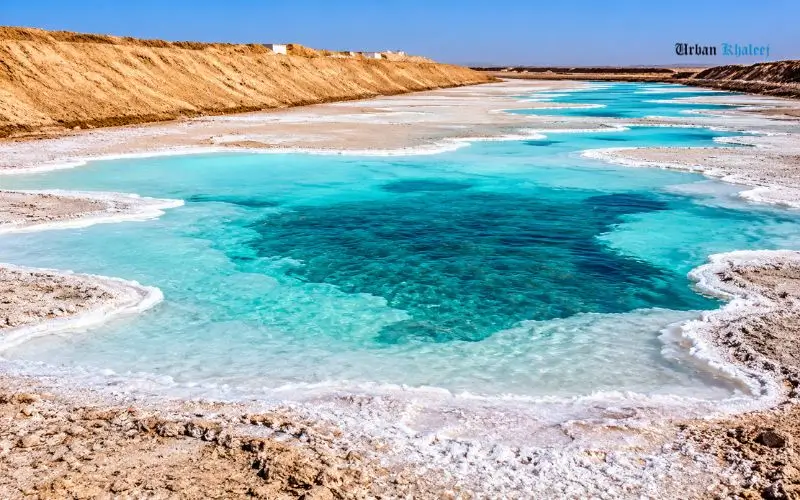
Al Wathba Salt Lake is a naturally occurring spot in Abu Dhabi that’s renowned for its turquoise waters, white salt formations, and desert landscape. It is situated southeast of Abu Dhabi city with an exclusive photographic and outdoor experience. The drive from central Abu Dhabi to the area takes about an hour, depending on the road conditions and starting point. The mornings and late afternoons are other great times to appreciate the scenery in a softer light. Please be aware that the desert tracks are not smooth and there are few facilities available. Please inspect the path, weather, and vehicle before heading out.
What Makes Al Wathba Salt Lake Unique?
It is recognized as an attraction for its unique shallow water, pale salt deposits, and sandy desert environments. Such a contrast of these colours helps to paint a picture of a different landscape than the dunes and built-up waterfronts that are usually linked to Abu Dhabi.
The water will appear different depending on the weather conditions, water levels and sun. The water is sometimes turquoise or greenish in colour, and the white mineral buildup forms patterns along the edges.
It was localised by Instagram images of its distinctive colours and geometric forms. The National published a travel report on 29 January 2026 that details the road to the lakes and some of the logistical aspects of visiting this undeveloped location.
The area is not guaranteed to provide organised activities, public seating, restaurants, or visitor services, unlike a conventional tourist attraction. It’s mostly the scenery that makes it appealing; for first-timers, it’s important to prepare.
Location and Directions to Al Wathba Salt Lake
The attraction is located in the Al Wathba desert region in the southeast of central Abu Dhabi. It can be accessed by road, but may include an unpaved track at the end. Navigate to Al Wathba Salt Lake Front using Google Maps. It can be used also for reviewing the route. Always verify the destination pin before leaving, as there are several attractions in the surrounding area of Al Wathba with the same name but different access.
Driving From Abu Dhabi City
The National says it takes about an hour to reach the center of Abu Dhabi by car under ideal conditions. This journey is on paved roads and a section of rough road before reaching water.
Prepare the way for the journey by doing the following:
- Type in the destination in your navigation system and see the full route.
- On main roads, head toward the Al Wathba area.
- Before leaving the paved road, inspect the rest of the course.
- Drive only if the track is appropriate for your vehicle and driving skill level.
- Park on hard surfaces where you can turn around and get away safely.
If you are travelling at busy times or if you are not familiar with the area, please allow extra time. Navigation estimates may not consider the slower driving speeds on rough ground.
Travelling From Dubai
The same National report says it takes about two hours to drive from Dubai, but if the starting point changes or the traffic is heavy, the journey time can vary.
Check fuel levels before leaving and bring sufficient drinking water with you for all persons travelling with you. If hiring a driver, make sure they are willing to drive on the final unpaved road and that the driver understands the schedule for returning prior to hiring.
Assume no direct access to public transport to the site. Check connections and subsequent transport before assuming responsibility.
Is a Four-Wheel-Drive Vehicle Necessary?
Using a four-wheel drive vehicle is helpful when driving on loose sand or rough roads, but it does not mean that every road is safe for a four-wheel drive vehicle.
The travel report for January 2026 talks about how to access the area by various modes of transport. One trip, however, does not make the case that all cars can be driven safely on the route under all circumstances.
Examine the course before use. If you find deep sand, slippery shoulders, or anything else that you cannot handle in your vehicle, turn around. If you haven’t driven before in the desert, it is advisable to have someone with experience who understands the route.
Read Also: Best Desert Safari Dubai
Best Time to Visit Al Wathba Salt Lake
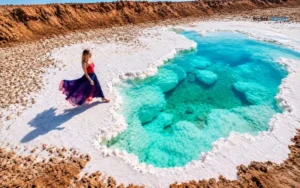
The best time to visit will vary based on the weather, the length of time you spend outdoors, and the amount of sunlight. Abu Dhabi is cooler in the winter months, and the tourist season is more pleasant than during the hottest part of the summer.
Best Months for Visiting
October to April is a sensible time to think about having outdoor fun in Abu Dhabi. Walking and photography are easier from November to March, but it does depend on the day.
In summer, it can be difficult to enjoy outdoor activities due to the heat and direct sunlight. With little shade and public facilities, it’s important to bring water and minimize exposure to heat.
Seasonal changes can also affect the landscape. The pools and the salt formations could change in appearance because of evaporation, rainfall, and changes in water levels. Images on the Internet may not be an accurate depiction of what you can expect to find on your trip.
Best Time of Day
Sightseeing and photography are best done in the early morning or late afternoon. It may be less intense than midday light, and temperatures may be more tolerable.
| Time of day | What to consider |
| Early morning | Potentially cooler conditions and softer light |
| Late afternoon | Warm light that highlights the salt formations |
| Midday | Strong sunlight and greater heat exposure |
| After sunset | Reduced visibility across unfamiliar desert ground |
Before leaving, consult sunrise/sunset times in the local area. If you plan on staying in the area until evening, make sure you have enough time to get back on board your vehicle and head back safely before the dark sets in and it becomes harder to navigate.
Things to Do at the Salt Lake
The primary focus is on the landscape, not on a programme of organised activities. The main attraction of the site is time spent taking photographs of the unusual rock formations, and enjoying a quiet moment outdoors.
Photograph the White Salt Formations.
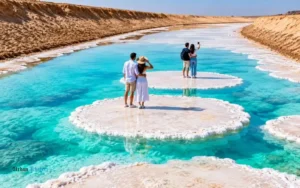
The salt deposits are light in color, producing a unique pattern on the sand and coloured waters. Include the surrounding desert, NOT focusing completely on the water, in a balanced landscape photograph.
Use a wide-angle lens or your phone’s camera to get a wider shot, or close-ups to focus in on details of the salt if on stable ground. Take various shots, but don’t step on fragile surfaces or get close to uncertain edges.
Sometimes, natural lighting can give more realistic results than heavy editing. Don’t use too much colour, as this will make the water look more vibrant than it is in reality.
Explore the Surrounding Desert
This is an open landscape, which provides a view of the difference between desert terrain and shallow water. The scenery can be enjoyed without having to plan an organised trip or a detailed itinerary.
Find safe ground and a safe spot to stand or sit, keep drinking water close by, and don’t step on soft, unstable ground. However, if a crust is pale, it doesn’t necessarily imply that the bottom is strong enough to support your weight.
Enjoy a Quiet Outdoor Break
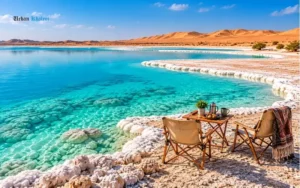
Visitors can take their own picnic mat, folding chairs and lunch (but their own food and drinks) and enjoy a picnic in an appropriate area, subject to any access restrictions in force.
It cannot be guaranteed that there will be public seating, shaded areas or designated picnic facilities at the site. Leave all rubbish and do not engage in activities that will harm the landscape.
Facilities, Parking and Entry Fees
The region is typically referred to in recent travel articles as an outdoor destination that hasn’t been developed. While it is a tourist destination, visitors are advised to expect no special facilities or services and to come with an open mind.
Toilets, Restaurants and Drinking Water
According to the national report from January 2026, there was no public toilet, café, or shaded rest area at the site on the day of their visit.
I’m not aware if any new facilities have been added since that report. Pack your own water, food, and other supplies, and rely on existing facilities before leaving the city for planning purposes.
Don’t assume that there will be a shop or restaurant close to the final approach. Bring adequate clothing and provisions for your intended trip, including extra water in case your hike lasts longer than anticipated.
Parking and Access
Assume that there is no marked bay and visitor services in the formal car park. Parking depends on the access road and surrounding ground.
Select a solid surface that will not impinge on other traffic or harm the natural surroundings. Stay out of soft sand, rough edges, and positions that may make turning around difficult.
When taking your car away, record the way back and have your cell phone on hand to navigate. This is especially critical if you arrive near sunset or if you have poor mobile phone reception.
Entry Fees and Opening Hours
I was not able to get an official, up-to-date policy on entry fees from an official source for the Salt Lake, and the opening hours were not published.
Please note that the entry information does not confirm the rules for this separate attraction. Please always confirm access conditions before travelling, especially in the event of weather or land conditions which could have an impact on your journey.
What to Pack Before Leaving
It is particularly crucial if you are going to visit a remote location with few facilities.
- Drinking water: Bring sufficient water for all, including additional water for unexpected delays.
- Sun protection: Take sun cream, sunglasses and a broad-brimmed hat.
- Appropriate shoes: Closed shoes are more functional when walking on sand and uneven surfaces.
- Navigation: Check out the route beforehand and store vital information offline.
- With your phone, keep a power bank to navigate and for emergencies.
- Bags for food and rubbish: Carry in and out food and rubbish bags.
- Vehicle check: Fuel, tyres and basic emergency gear.
- First-Aid Supplies: Have a basic first-aid kit.
Get Fuel Before Leaving The Main Urban Area. The National recommends refuelling prior to turning off to the destination as there are no petrol stations along the final approach.
When travelling with children, make sure to schedule stopping for water and avoid risky ground and water edges. Always share your travel plans and your return time with someone when travelling alone or anywhere in a remote area.
Nearby Attractions Worth Considering
There are several other attractions with the Al Wathba name, but they have different experiences and are in different access arrangements. Please always verify their official status before booking any travel plans with them.
Al Wathba Fossil Dunes
The Environment Agency – Abu Dhabi states that there are over 1,700 fossil dunes in the Al Wathba Fossil Dunes Protected Area, covering an area of some seven square kilometres. The formations are thought to be over four million years old.
In contrast to the salt lake, this attraction is focused on the geologic features that have formed as a result of wind, sand, and deposits of minerals.
Access notice: The official Environment Agency website currently states that the reserve is closed for the time being to be developed further. Please view the latest notice before visiting.
Al Wathba Wetland Reserve
Al Wathba Wetland Reserve is a protected ecological area that is renowned for Greater Flamingos and other birds. The Environment Agency says 37 plant species and over 250 bird species are found in the reserve. It became a Ramsar Site in 2013.
That’s a different experience at the reserve, where the focus is on wildlife, rather than salt formations and desert photography.
Access notice: The Environment Agency’s official webpage also states that the wetland reserve is temporarily closed for development until further notice. Check its status before traveling to it.
Access is required, and routes must be appropriate; the trip is not worthwhile. The presence of similar names does not imply an entrance, parking area, or visitor facilities with the same destination.
Safety and Responsible Visiting
More preparation is required for a remote desert area than for a developed tourist site. Before making the decision to proceed onto an unpaved road, review the weather conditions, ground conditions, and capabilities of your vehicle.
Keep on hard ground and avoid soft sand,d waterlogged areas, and unstable salt crusts. Avoid entering the water just to take pictures, and don’t assume that swimming is allowed or safe.
Another important factor is heat exposure. Bring adequate water and refrain from unnecessary activity in hot weather, and evacuate if anyone feels uncomfortable. If an emergency arises, dial the relevant emergency numbers inthe UAE.
Ensure that rubbish is carried off and that salt formations are not disturbed or encroached upon, and that restricted land is respected. Avoid leaving a vehicle in a position where access to the vehicle is obstructed or difficult for others to get back to.
Conclusion
It is a place to visit for those seeking some unique views of the desert and outdoor photography, or for those wanting to go somewhere other than the hustle and bustle of Abu Dhabi. This is because it is about the contrast of water, salt formations, and open desert, not organized activities or guaranteed facilities for visitors.
Be sure to plan carefully, know the conditions, and bring the right amount of supplies and time to return home safely before nightfall. Check access to local protected attractions individually and don’t litter while exploring. With the right mindset and planning, the trip can be an enjoyable experience of seeing a different side of Abu Dhabi.
Read Also: Al Bakhit Center Dubai: Location, Offices, Shops, Transport and Visitor Information
Barasti Beach Dubai Complete Travel Guide for Visitors
Al Mamzar Beach Sharjah Travel Guide Visit Today for Fun
Frequently Asked Questions
Where is Al Wathba Salt Lake located?
It is located in the Al Wathba desert area to the southeast of Abu Dhabi city. Use Google Maps to check the route before travelling.
How long does it take to reach the lake from Abu Dhabi?
The time taken is approximately 1 hour from central Abu Dhabi, depending on traffic and road conditions.
Is a 4×4 vehicle necessary?
Not always. However, if the current conditions are rough or sandy tracks, a suitable vehicle is required.
Are toilets and restaurants available?
There is restricted access to public facilities. Take drinking water, food,d and other necessities before leaving the city.
Is swimming allowed?
Was not able to check official swimming clearance. Don’t swim, as the depth, quality,y and ground stability of the water may be unknown.
Can families visit the salt lake?
Of course, it is possible to visit with the proper preparation. Bring sufficient water, wear appropriate footwear, and keep children out of the water.
Is Al Wathba Salt Lake the same as the Fossil Dunes?
No. The shallow water and salt formations in the salt lake and the mineral-cemented sand formations in the Fossil Dunes are both characteristic of the area.