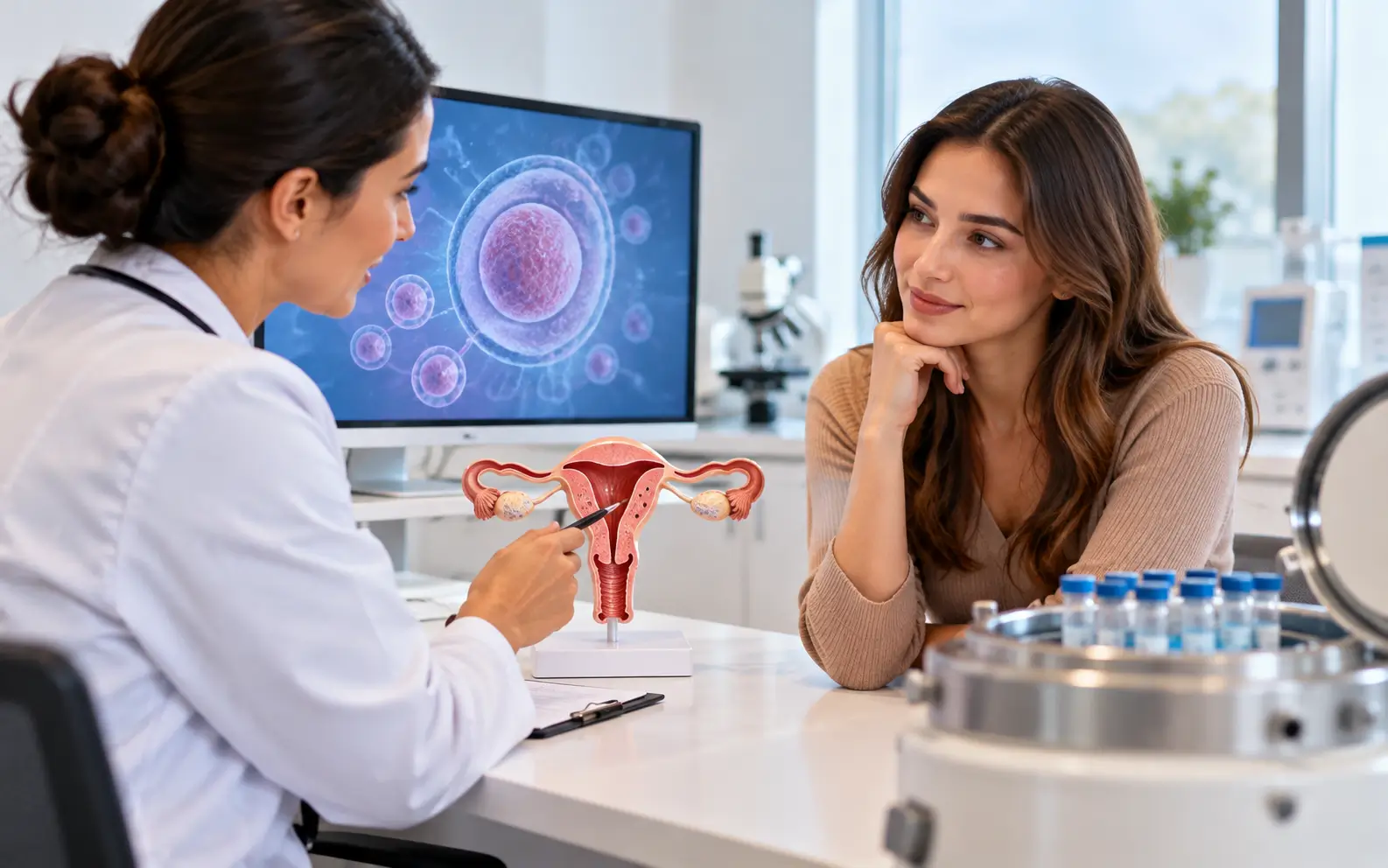
Fertility isn’t always as it would be expected to be in a given time frame. There are women who may wish to start a family someday, but are not ready to do so at the present time. Other people might be undergoing medical care which may impact their fertility. In such cases, it might be worth speaking with a specialist about fertility preservation.
One of the methods that can be used to preserve fertility is egg freezing. It’s the collection of a woman’s eggs and storing them for future use. It is not a promise of future pregnancies, however, and is dependent on various factors like age, ovarian reserve and personal history.
What Is Egg Freezing?
Egg freezing, or oocyte cryopreservation, includes utilizing medicine to promote the ovaries and develop a number of eggs. The eggs are then retrieved by a procedure and frozen by a method known as “vitrification.”
If the woman chooses to use the eggs later on, the eggs can be thawed and fertilised with a sperm donor. One could then be transferred to the uterus, which could then lead to a successful pregnancy if suitable embryos form.
The process is similar to IVF egg collection, however, the egg(s) are not fertilised, but instead frozen.
Who May Consider Fertility Preservation?
The only reason for egg freezing is not that obvious. One thing that is very common among the reasons is just that it is a wish to delay childbearing.
Eggs tend to get fewer and poorer in quality as a woman ages. A woman who knows she would like to have children someday but is not ready to become pregnant right now may, therefore, consult with a fertility specialist about egg freezing.
Medical treatment is another important reason. For instance, some cancer treatments can impact how well the ovaries work and the ability to become pregnant. If treatment is planned, a specialist may consider discussing fertility preservation before treatment, if appropriate based on the individual’s situation and timely.
Additionally, some women may want to choose preservation due to their personal or family history. This is highly individual and should be made after working out the pros and cons.
Why Timing Matters
When considering the age of the egg-freezer, it’s important to remember that younger eggs are more likely to result in a healthy embryo than are older eggs.
This doesn’t imply that there is a definite age at which all women should freeze their eggs. Each woman’s ovarian reserve and reproductive status is unique.
Anyone who is thinking about Egg freezing in Dubai can consult with a fertility specialist to find out if the freezing of eggs at this stage is beneficial or not, and what is known as an ovarian reserve test. Consultation also can set realistic expectations for how many eggs may be collected and the likelihood of multiple cycles.
What Does the Process Involve?
Egg freezing usually takes place over several weeks and involves a number of steps.
Several eggs mature with medication which stimulates the ovaries. This is monitored by ultrasound scan and, in some instances, blood tests. When the eggs are mature, they are removed in a brief process.
The mature eggs are then frozen and stored to be used in the future. This experience may differ from person to person. During ovarian stimulation some women may experience mild discomfort or bloating, as others may experience little or no symptoms. The possible side effects and risks can be explained before treatment by a specialist.
What Happens When the Eggs Are Needed Later?
Freezing eggs provides a woman with the possibility of using her eggs at a later date; however, it does not guarantee pregnancy. If the eggs are required, they are thawed and fertilised and the usual method of doing this is by intracytoplasmic sperm injection (ICSI) which involves the injection of a single sperm into an egg. Transfer of the embryo to the uterus may be performed if the embryo does develop.
In some cases, IVF treatment may therefore become a part of the process. It may be influenced by which age the woman is during egg freezing, how many and good eggs were frozen, quality of sperm and embryo development.
Choosing Where to Preserve Your Fertility
One of the key steps in the process is selecting a clinic. Patients need to consider the experiences of the fertility doctors, the embryology lab, the storage area and the support given throughout the treatment.
The patient should also learn about the approach to fertility preservation of an IVF clinic UAE and whether the medical team takes the time to break down the process for a patient.
It is good to find a clinic that will allow you to ask questions about the procedure, potential complications, storage conditions and what might occur if you decide to use the eggs in the future.
Is Egg Freezing Right for Everyone?
Egg freezing is another fertility preservation method that available to women who would like to preserve their fertility but not for everyone. The eggs that can be harvested vary, with some women not having a sufficient number of eggs in a single cycle. Frozen eggs do not necessarily lead to pregnancy either.
Therefore, it is recommended to make a personal decision on this and not a general one. A fertility expert will be able to talk about your personal plans, medical history, and age, and determine if preservation is right for you.
Making an Informed Decision
While egg freezing can provide some future options for women, it is crucial to know the ins and outs of this treatment. It should be considered as a means to sustain an opportunity for treating the patient for pregnancy in the future, not a promise of pregnancy down the road.
Discussions with a fertility specialist can help you to understand the freezing process and what might be feasible for you. At Best Life Fertility Center, patients can explore their options, such as the impact of age, ovarian reserve, and other patient health factors on fertility preservation, through discussion. Having a well-informed conversation can be helpful in making a selection that is appropriate to your health, situation and future goals.
Read Also: UAE Health Insurance