Dubai’s historic buildings are a testament to the journey of a small trading town becoming a modern, international city. Of all these symbols, Dubai’s Deira Clock Tower and Clock Tower Roundabout are significant reminders of the city’s early urban development and architecture. It is nestled in one of the oldest commercial areas of the city and has been a local landmark for decades. The tower stands as a symbol of the city’s growth and transformation, and its presence in the surrounding area indicates that it is part of the city’s history and culture. It is one of the most recognizable landmarks in the city due to its historical significance, its unique design, and its central location.
Quick Facts About the Historic Landmark
| Feature | Details |
| Location | Deira, Dubai, United Arab Emirates |
| Nearby Area | Al Rigga |
| Roads Connected | Umm Hurair Road and Al Maktoum Road (D89) |
| Construction Period | 1960s |
| Main Purpose | Landmark, traffic junction, city symbol |
| Architectural Style | Modernist design |
| Nearest Metro Stations | Al Rigga Metro Station and City Centre Deira Metro Station |
| Major Renovation | Redevelopment completed in 2023 |
History and Development of Clock Tower Roundabout
Dubai’s iconic landmark has a history dating back to the 1960s when the city was in a new developmental phase. The city continued to enhance its road and trade links and infrastructure during this period, and Deira was emerging as a significant commercial hub.
The tower was constructed in the 1960s and soon became one of Dubai’s most iconic structures. There are conflicting indications from various sources that it was completed around 1965 or perhaps earlier, as official records from this period are not very abundant.
It was selected due to its proximity to key locations within Deira and Bur Dubai. The proximity of the Al Maktoum Bridge, the first bridge connecting these two areas, further enhanced the location’s significance for transportation and everyday mobility. The location’s importance for transportation and everyday mobility was further increased by the presence of the nearby Al Maktoum Bridge – the first bridge between the two areas.
Dubai was quite different when it was constructed, with fewer buildings and developments. The landmark symbolized the progress of the city and its march towards modernisation. The building has been a significant landmark in Dubai’s history, and over the years, the surrounding area has evolved into a vibrant commercial hub.
Read Also: Clover Bay Tower
Why Was the Deira Landmark Built?
The design for the tower was closely tied to Dubai’s desire to create iconic landmarks that would signal progress. Some historians say Sheikh Ahmed of Qatar gave a big clock to Sheikh Rashid bin Saeed Al Maktoum. It led to the notion of establishing a framework to make the clock a part of a significant landmark in the heart of the city.
The design concept was linked to an architect named Ziki Homsi, who was affiliated with the Architecture Design Construction (ADC) Office, and was also associated with Otto Bullard. The building was designed with a simple but distinctive form, to be identifiable from various angles.
This was no simple clock design, but rather a symbolic representation of Dubai’s evolution into a modern city.
Architectural Design and Features
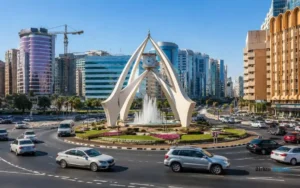
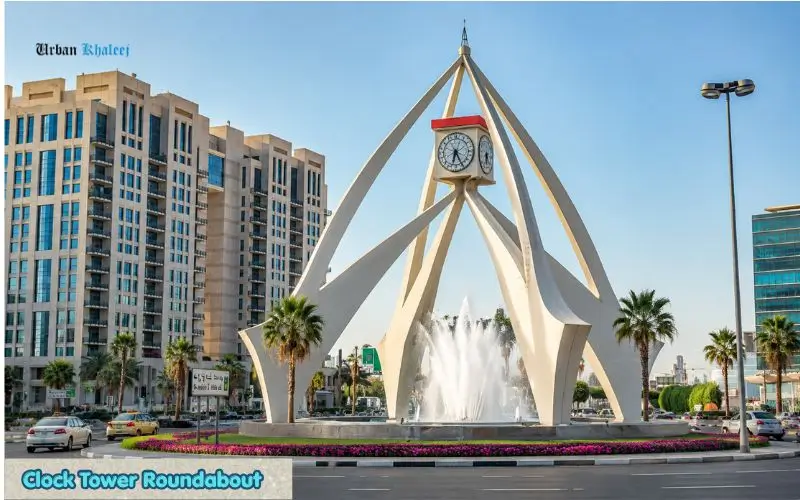
The design of the landmark itself is typical of the modernist style that was in vogue in the 1960s. This building also possesses a clean geometric design, as opposed to many of the newer attractions in Dubai, which are glass, steel, and advanced engineering.
It has the following most recognizable characteristics:
- Four curved supports that converge towards the top.
- A firewall with several unobstructed viewpoints of a central clock.
- A design that is balanced on all sides and looks good from any perspective.
One of the things that makes it so memorable, even in this fast-changing world, is the simplicity of its design.
The building also exemplifies the importance of its role within the city’s identity. The sites that are of significance are not necessarily because of their size, but rather as a link to local history and public memory.
Renovation and Modern Improvements
With continued growth in Dubai, it was important to keep historic landmarks in urban planning. The municipality strived to retain the character of the landmark, while enhancing the surrounding area.
Dubai Municipality redeveloped the area in a significant way in 2023. They worked on the flooring, landscaping, design of the fountain, lighting, and other visual elements around the structure. The redevelopment project cost around AED 10 million and sought to blend heritage conservation with contemporary city design.
The enhanced environment consisted of:
- Enhanced pedestrian and landscape improvements.
- A new fountain system.
- Modern lighting features
- Some new plants and decorative features were added to the site.
The renovation project preserved the landmark’s historical significance while ensuring that it continues to be an attractive place for residents and tourists alike.
Traffic and Transportation Significance
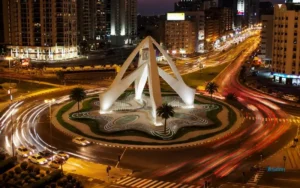
The Clock Tower Roundabout is a crucial intersection in Deira, linking various key roads and facilitating daily traffic flow throughout the region. It is located in the heart of Dubai, making it an essential hub for commuters who need to move between different parts of the city.
Major Road Connection
The site is linked to major roads, such as Al Maktoum Road (D89) and Umm Hurair Road,d and plays an important role in connecting the roads that pass through Deira.
Connection Between Deira and Bur Dubai
It is also one of the vital connections between Al Maktoum Bridge and Deira and Bur Dubai, a historic area of the city, and is of importance in the management of movement between the two.
Daily Traffic Flow
There is frequent traffic to and from the area as a result of the offices, shops, hotels, and commercial activity in the vicinity. This is a very busy junction for taxis, buses, private cars, and visitors.
Read Also: Lake Central Tower
Location and How to Reach Clock Tower Roundabout
One of the key factors that make this historic landmark significant in the context of Dubai’s urban development is its location. It’s located in one of the oldest and busiest districts of the city, Deira.
The building is sited in the heart of Umm Hurair Road and Al Maktoum Road (D89) near Al Rigga and the historic link between Deira and Bur Dubai via Al Maktoum Bridge. This strategic position provided value to travellers and residents for decades.
This was one of the earliest landmarks for those coming to Dubai during the city’s early expansion, when the major routes all came together around this landmark. Although there are many newer attractions in Dubai today, the area is also very accessible as it is located in the center of the city and offers great transportation opportunities.
Reaching the Landmark by Dubai Metro
This is one of the simplest ways to get to the area by public transportation. The closest Dubai Metro stations are:
- Al Rigga Metro Station (Red Line) – a convenient option for visitors coming from central Dubai.
- The City Centre Deira Metro Station (Red Line) – one of the stations nearby to one of the major shopping destinations in Deira.
The stations are located only a short walk (or taxi ride in favorable weather conditions) from each other,r and visitors can walk or take a short taxi ride, depending on the weather and their personal preference.
Reaching by Car or Taxi
It is well connected by major roads, making it easily accessible from various parts of Dubai. The surrounding roads are often used by taxis, ride-hailing, and private vehicles.
It takes less than 15 minutes by car (traffic permitting) from Dubai International Airport. It is also located in proximity to major commercial areas, making it a convenient gathering place for residents and visitors alike.
Nearby Attractions to Explore
Some of the benefits of visiting the region are the number of historic and modern attractions nearby. Deira is a blend of traditional markets, shopping centres, waterfront experiences and cultural venues.
Dubai Creek
Dubai Creek is a historical place in the city. It was important to the early economy of Dubai in fishing, pearl diving and maritime trade.
The landmark is a must-visit for Dubai tourists while exploring Deira, where tourists can also visit the creek area and have access to traditional boats, views of the water, and historic neighbourhoods which offer different coverage of Dubai.
Deira Gold Souk
One of Dubai’s most popular traditional markets is the renowned Deira Gold Souk. It is a place to go for people loving jewellery shopping and experiencing one of the oldest commercial districts in the city.
The souk is a testament to Deira’s rich history as a hub for trade and international commerce.
Spice Souk
The Spice Souk is located close to the creek and features traditional herbs and spices, dried fruits, and regional products. It offers the opportunity to explore the cultural heritage of old Dubai.
City Centre Deira
City Centre Deira is an ideal place to shop in the modern era, with shops, restaurants, entertainment facilities, and easy access via the metro network.
The juxtaposition of traditional markets with modern shopping centres reflects Deira’s ability to preserve its historical character and adapt to the modern urban way of life.
Cultural Importance of the Landmark
This historic landmark is more than just a structure. It is a time when Dubai was carving out its new role as an emerging commercial hub. Before the building of Dubai’s iconic skyscrapers and massive projects, structures like these were integral to the city’s visual identity. To many of the residents, it became synonymous with the memories of travelling through Deira, meeting members of family, and navigating the city before GPS was widespread.
The building also illustrates the value of older architectural landmarks in the context of the ongoing modernisation of cities. Dubai has not ignored historic features; instead, it has poured resources into preserving and upgrading historic features.
Dubai Municipality has emphasised the need to preserve prominent landmarks and enhance their environment. In 2023, a restoration project was carried out to improve the landscaping, lighting, flooring and fountain features while maintaining the integrity of the building’s original character.
Best Time to Visit and Photography Tips
The landmark can be seen all day, but it changes depending on the time of your visit.
Morning Visits
The early morning is a great time to visit for those who like to visit in a calm and peaceful environment with better views. The natural light also highlights architectural details.
Evening Visits
Evenings are sometimes more appealing as they will be lit by the surrounding lights, which will create a different atmosphere. Improved lighting features, following the redevelopment in 2023, have enhanced the night-time look of the area.
For better photographs:
- Take images from various perspectives, especially from behind.
- Add neighboring roads and buildings in the city to indicate the difference between the old and the new Dubai.
- The golden hour is the time of day when the sun is low, creating softer natural lighting.
- Beware of using pedestrian areas near the landmark, as it is in a heavy traffic area.
Role in Dubai’s Urban Development
Dubai has undergone one of the greatest urban changes in the region. Before the city’s skyline was altered by global projects, it had a past that is evident in the historic districts such as Deira.
The landmark became significant as it became the link between transportation, commerce and city identity in a single place. It was a time when Dubai was grooming roads, building trade networks and establishing memorable public spaces.
Older landmarks tell the story of the building of the city, while today, Dubai’s modern districts like Downtown Dubai, Dubai Marina, and Business Bay are no longer ignored.
Preservation of Historic Landmarks in Modern Dubai
Older buildings can face challenges in the face of rapid urban growth. There is a need for cities to develop and preserve heritage.
The strategy adopted by Dubai has been to retain some of the historic monuments, and the surrounding areas have been upgraded. This enables the old monuments to be useful and significant for their current life in the city without becoming irrelevant.
The restoration of this landmark is an example of how heritage sites can be used in modern urban design. The project preserved the existing structure, but added enhancements that improved the public space around the house.
Conclusion
The Clock Tower Roundabout is a significant and important historic landmark of Dubai, which dates back to the era when the city was a small trading port and is now recognised by the world. It has been able to keep its relevance for generations due to its unique architecture, location,n and association with the development of Deira.
Even as Dubai becomes more and more modern and bold with new attractions and developments, this place is a reminder for those of us who remember what Dubai was like in the past. It offers a fascinating look at the history, culture, and evolution of Dubai for those interested in exploring the city’s past.
Read Also: Silverene Tower Dubai: Apartments, Facilities, Rental Prices & Lifestyle
Lake Terrace Tower Dubai: Location, Apartments, Amenities & Investment
Le Solarium Tower Dubai Silicon Oasis: Complete Property Guide
Frequently Asked Questions
What is the Clock Tower Roundabout famous for?
The Clock Tower Roundabout also features the iconic and one of Dubai’s earliest and most recognised landmarks, the Deira Clock Tower. It symbolizes the city’s expansion from a small trading post to a modern urban area.
Where is the Clock Tower Roundabout located?
It is situated in Dubai, in the area of Al Maktoum Road (D89) and Umm Hurair Road (D90), close to Bur Dubai and Deira.
When was the Deira Clock Tower built?
The landmark was built in the 1960s. Many historical references mention around 1965 as its completion period, although some sources provide slightly different dates.
How can I reach the Clock Tower Roundabout by metro?
The area can be accessed via the Dubai Metro Red Line. The closest stations are Al Rigga Metro Station and City Centre Deira Metro Station, which are just a short walk from the hotel or a taxi ride.
Is the Clock Tower Roundabout free to visit?
Yes, the landmark can be seen without paying any fee from the surrounding public space. A popular photography and sightseeing location.
What attractions are near the Clock Tower Roundabout?
It’s near Dubai Creek, Deira Gold Souk, Spice Souk, and City Centre Deira to explore the historic and modern Dubai.
Why is the Deira Clock Tower important in Dubai’s history?
The landmark holds significance in relation to Dubai’s early urban growth and continues to serve as a symbol for the city’s architectural identity and transformation as well as its heritage.