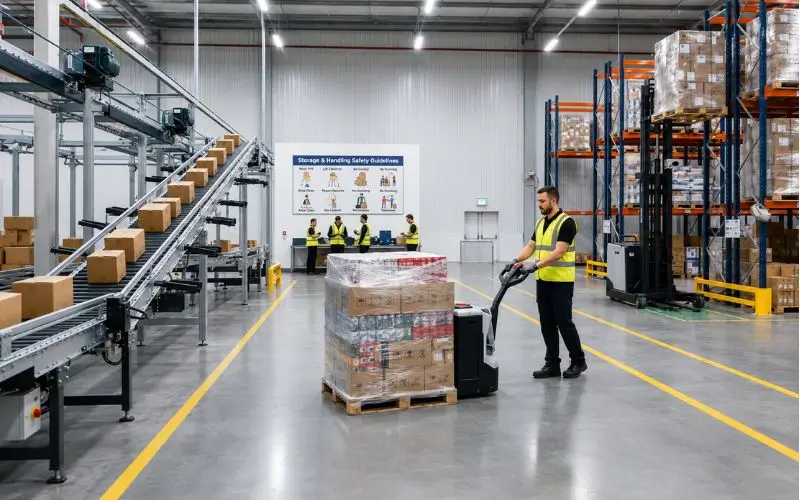
All retail distribution centres have the objective of transporting goods safely from one location to another without damage. This can be accomplished through the use of appropriate material handling equipment, organizational storage systems, and trained personnel.
All of these practices help minimize the loss of product, boost efficiency, and ensure that businesses can provide their goods in a state of excellence.
Damage from internal transport is significantly reduced by the strength of the storage containers, handling procedures, the use of standard equipment, the computerisation of warehouses, and regular employee training.
Businesses prefer the reliable supply of plastic crates supplier in the UAE Crateco Pack LLC because sturdy plastic crates ensure the protection of products throughout the day in the warehouse and during multiple deliveries.
Why Does Internal Transport Damage Happen?
Internal transport is the movement of products within a warehouse or distribution centre. Goods are moved from one receiving area to another, storage rack to picking area, picking area to packing area, packing area to loading doc,k and loading dock to another receiving area.
In these movements, products can be dropped, crushed, scratched, ed or damaged if proper handling procedures are not adhered to.
Common reasons include over-filled containers, inadequate packaging, unbalanced stacking, rough handling, improper storage equipment, and narrow aisles and pathways in the warehouse. These issues can be identified to prevent businesses from losing too much.
Why Is Damage Prevention Important for Retail Distribution Centers?
Product damage involves more than just inventory. It results in higher replacement costs, delayed deliveries, lower customer satisfaction,n and waste.
With thousands of products moving through a warehouse each day, even minor damage can cause a lot of financial harm.
Logistics improvements and the use of reusable logistics equipment by retailers enhance the efficiency of their operations and help safeguard valuable products all along the chain.
Effective Ways Retail Distribution Centers Prevent Product Damage
1. Using Strong Plastic Crates for Product Movement
The best strategy to minimize product damage is to switch from weak to durable plastic crates. Plastic crates retain their shape when used over and over again, and will not collapse if they are handled a lot.
They offer enhanced support to products when being moved between different parts of the warehouse. Backed with strong walls, crate contents are well protected from impact and are also protected from collapse if the containers are stacked. This provides a higher level of protection for products during handling.
2. Standardizing Storage Containers
Different container sizes may lead to instability when stacking and transporting. The standard-size plastic crates make products easily fit on pallets, shelves, and conveyors. Workers can transfer containers to and from the area without having to worry about uneven loads.
Standardisation can also enhance warehouse efficiency and organisation,n enabling products to be easily identified and space used to the optimum. Uniform storage helps to minimize handling errors and streamline the process.
3. Safe Stacking Practices
One of the main reasons for damaged inventory is improper stacking. Packaging can be compromised and products below crushed by heavy goods placed on lighter ones. Stacks can also be unbalanced and fall during transportation.
These risks are minimized at distribution centers by observing safe stacking rules, such as:
- Do not stack above recommended maximum heights.
- Load the heavier objects at the bottom.
- Make sure crates are the same size.
- Do not lean or stack in an off-center manner.
- Secure loads before transport.
These simple practices help increase stability and minimize product movement while handling.
4. Improving Warehouse Layout
A warehouse system that is organized keeps unnecessary product movement to a minimum. A shorter distance reduces the risk of bumping, dropping, or mishandling products.
Wide aisles also enable forklifts and pallet jacks to navigate without harming nearby stock.
Well-organized receiving, storage, picking, packing,g and shipping space helps to provide a smoother operation. This enhances the efficiency of the employees in handling the products without the risk of injury.
5. Training Employees in Proper Handling Techniques
The best equipment will not save the day if they are used improperly by workers. Frequent employee training on lifting, stacking, moving, and storing products safely.
Typical training programs will include:
- Correct lifting techniques
- Safe forklift operation
- Proper crate stacking
- Careful product loading
- Handling fragile goods
- Taking warehouse safety measures
When employees are well-trained, they make fewer mistakes, which helps them to produce a consistent product.
6. Using Equipment Designed for Material Handling
Moving merchandise quickly is accomplished with several pieces of equipment utilized in retail distribution centers. If equipment is as large and heavy as the containers, handling is safe.
Common material handling equipment consists of:
- Forklifts
- Pallet jacks
- Conveyor systems
- Trolleys
- Roll cages
- Stackers
Compliant equipment minimises abrupt shocks and maintains product stability during transport.
7. Reducing Manual Handling
Each handling of a product carries the potential risk of the product being dropped or damaged. Minimising unnecessary manhandling helps to reduce this risk considerably. Many “warehouses” do not handle individual products more than once, but move full crates.
Plastic crates that can be reused can be used for products to be stored in them from the time they are received until they are shipped. This will reduce the need for direct contact and give constant protection during warehouse activities.
8. Keeping Products Secure During Transport
During the transportation process, products tend to move within the containers, especially as they move throughout the warehouse. Empty areas provide a place to move freely, which may result in scratches and/or breakage.
Distribution centres minimise movements by using appropriate crate sizes. Delicate products can also use Dividers, inserts, and protective liners. Items remain stable during transportation by proper load securing.
9. Performing Regular Equipment Inspections
Product losses can easily rise due to damaged containers and worn-down handling equipment. Damage to crate corners, cracks in pallets, or wheels can lead to products falling in transit.
Routine checks help to detect issues before they impact operations. When containers are damaged, companies need to replace them as soon as possible to prevent any disruption in the supply chain and for safety.
10. Supporting Long-Term Warehouse Efficiency
Extra value protection goes beyond reducing product damage. It also helps to ensure that the warehouse operates more smoothly, reduces replacement expenses, decreases customer complaints, and boosts employee productivity.
By using reusable logistics equipment regularly, businesses can save a lot of time on dealing with damaged items and concentrate on the order fulfilment process. This helps to improve the performance of the supply chain and long-term growth for businesses.
Additional Ways Retail Distribution Centers Protect Inventory
Modern warehouses apply multiple techniques to reduce product damage in the warehouse.
Other good practices to consider are:
- Using barcode systems for inventory accuracy
- Sorting fine and heavy itemsSorting fragile and heavy products.
- Having regular warehouse maintenance scheduled
- Keeping transport routes free from obstacles
- Assessing product handling performance.
- Storing in waterproof containers
- Providing clear product labelling
- In line with the standard operating procedures
These measures combine to enhance the safety of the warehouse and minimize its operational risks.
Benefits of Reusable Plastic Crates in Retail Distribution
There are numerous benefits of reusable plastic crates that help safeguard products from day to day in the warehouse.
Key benefits include:
- High impact resistance: Good plastic structure absorbs impact from everyday handling, and products will not crack, dent, or suffer from accidental damage in transit.
- Repeated use: They are designed for industrial repeat usage and will last for years and year before needing to be replaced, therefore lowering overall packaging costs.
- Stackable Design: Uniform dimensions ensure containers can be stacked safely, maximizing storage space and minimizing the risk of containers shifting or collapsing during transit.
- Easy Cleaning: Smooth plastic surfaces can be easily cleaned, which helps to ensure proper hygiene practices and makes the crates suitable for repeated use in various industries.
- Waterproof: Plastic material will not absorb water, thus counteracting damage and safeguarding stored products in humid and wet surroundings.
- Improved load stability: Rigid construction and robust walls ensure secure positioning of the product, minimizing product movement during transport and risk of damage.
- Lightweight Construction: Durable materials with a lightweight design make it easier for employees to lift, carry, and move crates during regular warehouse operations.
- Less Packaging Waste: Reusable crates are used for all loads, which helps businesses achieve less packaging waste and better help meet long-term environmental goals.
- Lower Long-Term Operating Costs: Longer product lifespan, less replacement means lower packaging costs and better overall operational cost efficiency for businesses.
- Multiple Sizes: Reusable crates hold, move, and manage different retail products in multiple ways within the warehouse.
These qualities make reusable plastic crates a worthwhile investment for a dynamic distribution centre.
Conclusion
By implementing better handling practices, utilizing quality reusable containers, educating employees, and enhancing warehouse processes, retail distribution centres can greatly minimize product damage.
Minor enhancements in processes can result in significant reductions in product loss and operating costs. Retail supply chains are expanding across the UAE and GCC, and businesses are putting in investment in enhanced material handling.
These solutions enhance the efficiency of the operation while increasing protection of the products during the operation.
Reusable plastic logistics equipment continues to be one of the best solutions for a safe transport system internally and for a more reliable and productive warehouse operation.
Read Also: Al Wahda Medical Cente