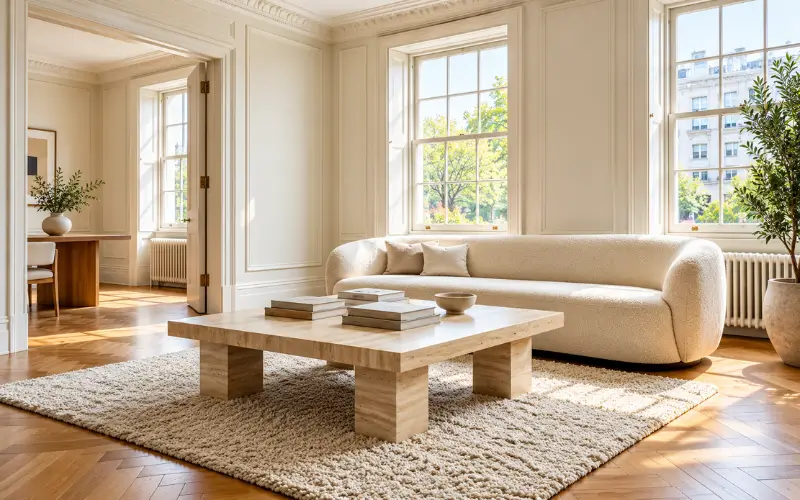
A coffee table can change how a living room feels without changing anything else. A veined marble surface adds contrast and refinement. Travertine brings warmth through its earthy tones and textured finish.
Both are natural stones, and both work beautifully in contemporary interiors. However, they respond differently to everyday use. The right choice depends on the look you want, the way you use your living room, and how much care you are willing to give the furniture.
1. Marble vs Travertine at a Glance
Look at a marble coffee table and a travertine one side by side. The difference is hard to miss.
Marble tends to have more pronounced veining, with patterns that run across the surface in unexpected directions. Some slabs have fine grey lines against a white background. Others feature darker, more dramatic markings. No two slabs look exactly alike.
Travertine has a quieter kind of variation. Its surface often features small pores, cloudy patterns and layers of beige, ivory or cream. The texture gives it character even when the colour is fairly uniform.
These differences affect how each table fits into a living room. Marble can bring contrast to a room filled with neutral furniture. Travertine works well alongside timber, linen and other natural finishes.
Neither needs much decoration around it. The stone itself can do most of the work.
| Feature | Marble | Travertine |
| Appearance | Distinctive veins and varied colours | Earthy tones and natural texture |
| Surface | Smooth, polished or honed | Textured, filled or unfilled |
| Everyday wear | Generally harder, but etching can be visible | Can conceal minor marks, depending on finish |
| Porosity | Varies by stone | Generally more porous |
| Maintenance | Requires careful cleaning and spill management | Needs careful cleaning and attention to its pores |
| Best suited to | Statement-making interiors | Warm, understated interiors |
2. Which Looks Better in a Living Room?
The appearance of your coffee table influences the room’s overall balance. Marble and travertine create different effects, even when they share similar colours.
Marble creates a focal point
Marble is known for its distinctive veining. Depending on the variety, these patterns can range from subtle grey lines to bold movements across a white, green or dark surface.
Picture a cream sofa, a neutral rug and a marble coffee table with pronounced grey veining. The table introduces contrast without requiring additional decorative pieces.
This makes marble a strong choice for contemporary and formal interiors. It also works well with simple furniture shapes that let the stone stand out.
Travertine adds warmth
Travertine usually features cream, beige and other earthy shades. Its layered patterns and natural pores give the surface more texture than a uniformly smooth finish.
Think of a living room with oak flooring, linen upholstery and warm neutral walls. A travertine coffee table complements these materials without competing for attention.
Its appeal lies in how it connects different textures in a room. Rounded forms and sculptural bases can further emphasise its natural character.
The verdict: Choose marble when you want the coffee table to draw the eye. Travertine works particularly well when you want the table to complement the room’s existing materials.
3. Which Is More Durable for Everyday Use?
Durability in natural stone depends on more than hardness. A surface may resist scratches reasonably well and still develop dull marks from spilled drinks. Another may hide minor wear but need more attention because of its porous surface.
Marble and travertine handle these things differently, and knowing where each one is vulnerable can help you make a better choice.
Marble can show surface damage
Marble can develop scratches, chips and dull patches. Acidic substances such as lemon juice, vinegar and wine can also etch its surface.
Etching is different from stains. A stain occurs when a liquid seeps into the stone and discolours it. Etching occurs when the acid reacts with the marble itself, impacting its surface. Sealing can help thwart stains, but it won’t stop etching.
Travertine has its own vulnerabilities
Travertine has tiny pores across its surface. Some are filled during finishing, while others remain visible. An unfilled surface can trap crumbs and dirt, which makes cleaning a little more involved.
The texture does have one advantage. Small marks may be less obvious on travertine than on a smooth, polished marble surface. Still, the stone can scratch or chip, so it isn’t necessarily the tougher option.
For a coffee table that gets used throughout the day, filled and honed travertine is worth considering. The smoother surface is easier to wipe down, and the matte finish draws less attention to minor marks.
4. Which Is Easier to Maintain?
Marble needs a little more attention when drinks are involved. Lemon juice or coffee left on the surface can leave marks, so wiping up spills quickly is a good habit. Travertine has its own challenge. Its tiny pores can trap dust and crumbs, especially if they haven’t been filled.
For both stones, a soft cloth and a pH-neutral stone cleaner are your safest bet. Keep vinegar, lemon-based cleaners, and abrasive products off the surface, as they can damage the finish.
Sealing can help limit liquid absorption, but it won’t make either stone stain-proof. How often you need to reseal depends on the stone, its finish, and the product you use.
If you want less day-to-day fuss, filled and honed travertine is worth considering. Marble can be just as manageable, provided you’re quick to clean spills and careful about the products you use.
5. Which Coffee Table Offers Better Value for Money?
Travertine is often more affordable than premium marble varieties, but the price difference is not fixed. A simple marble variety may cost less than an elaborate travertine design with complex workmanship.
Several factors influence the final price:
- Stone selection: Colour, pattern, quality and availability affect material costs.
- Dimensions: Larger tabletops and thicker stone sections require more material.
- Construction: Solid bases, sculptural forms and specialised edge details involve different levels of workmanship.
- Finish: Polished, honed, filled and other finishes require different treatments.
When comparing two tables, look beyond their material names. Consider the stone quality, construction, finish, and how well the design suits your space. A lower purchase price does not necessarily mean better value. A table that fits your room and meets your practical needs is more likely to remain a satisfying choice.
6. So, Which Material Is Better for Your Living Room?
The answer depends on what you expect from your coffee table.
Choose marble if you want distinctive veining, stronger visual contrast and a table that becomes a focal point. It works particularly well in restrained interiors where the stone can stand out. However, you should be comfortable with the care natural marble requires.
Choose travertine if you prefer earthy colours, textured surfaces and sculptural forms. Its natural variations complement timber, linen and other warm materials. A filled and honed finish is a sensible option for a coffee table used regularly.
Before deciding, consider the room’s colour palette, how often you’ll use it, and the stone’s specific finish. These details matter as much as the material itself.
Ultimately, marble makes a stronger visual statement, while travertine adds warmth and a softer presence. Both can work beautifully in a living room when the choice reflects the way you use and style your space.
Read Also: Zabeel Palace: Location, History, Royal Residence and Visitor Guide